A long-distance bus can be the simplest way to reach a Korean city without a railway station. The confusing part is often not the ride but the departure terminal: Seoul Express Bus Terminal, Central City, Dong Seoul and Seoul Nambu are not interchangeable. Even two buses to the same city may leave from different buildings. This guide starts with the checks that matter before you pay.
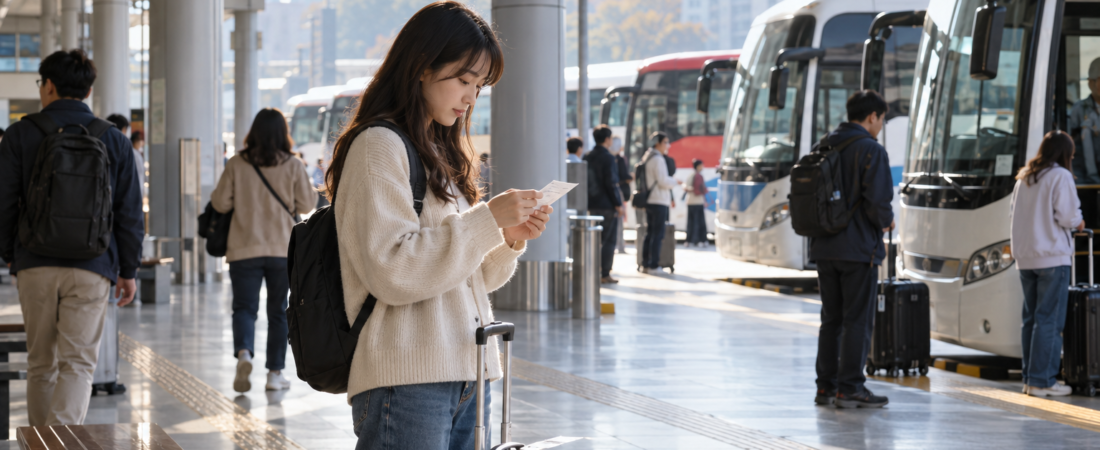
Header image: illustrative editorial scene, not a photograph of a named terminal. Check the live departure board for your actual platform.
Express or intercity: what are you booking?
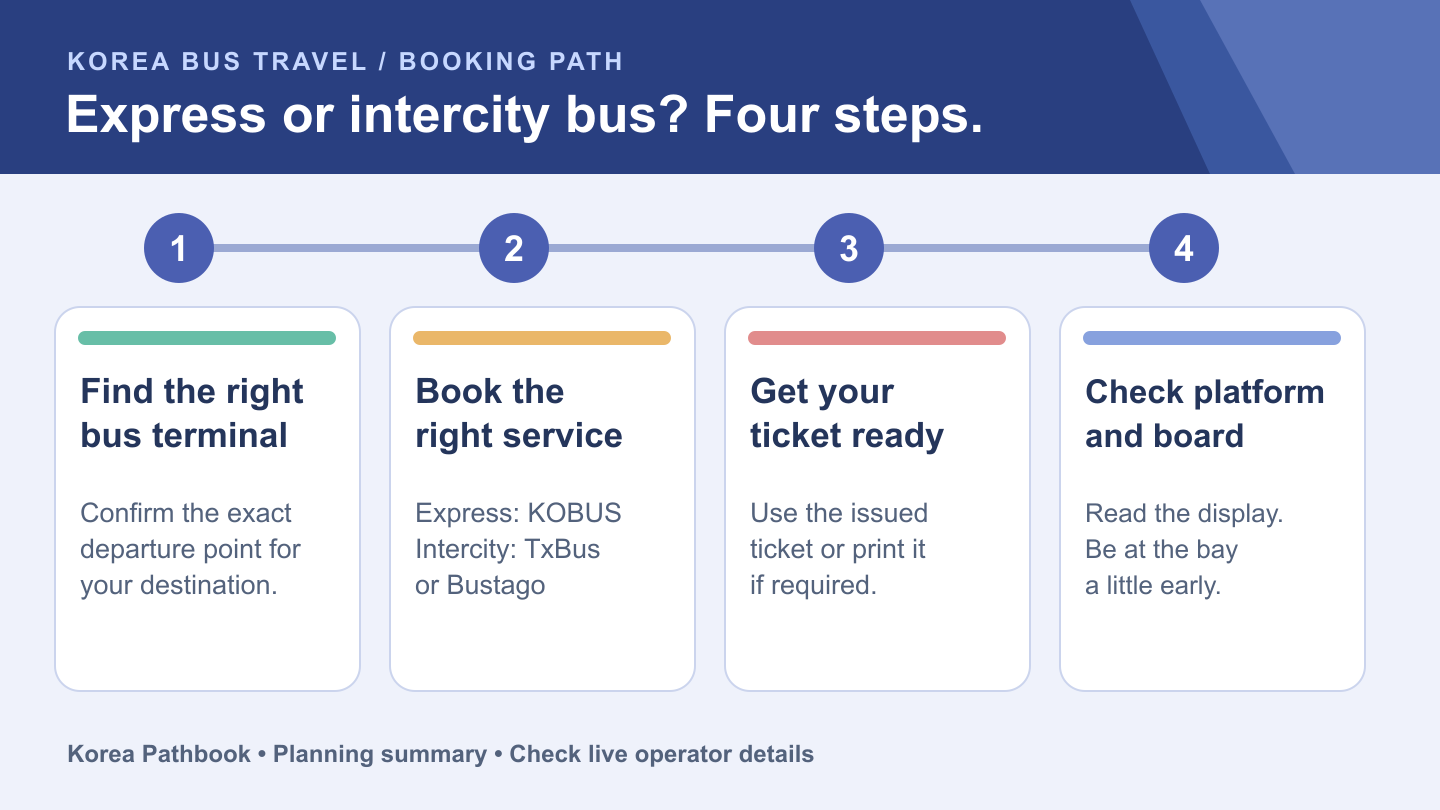
Korea’s express buses usually take expressways between major terminals, while intercity buses cover a wider network and may make intermediate stops. Both can have different seating classes and late-night fares. The important distinction for a traveler is practical: search the right booking system and read the exact departure and arrival terminal on the ticket. A city name alone is not enough.
| Service | Useful when | Check before paying |
|---|---|---|
| Express bus (고속버스) | A direct long-distance route between major terminals fits your itinerary. | Search KOBUS; compare class, departure terminal and destination terminal. |
| Intercity bus (시외버스) | You need a smaller city or a route with intermediate stops. | Search TxBus or Bustago; check the stop and ticket-collection instructions. |
Not every route appears on every portal. If an online search returns nothing, try the other relevant service type before assuming that no bus exists. Departure times, seat availability and fares should always come from the live booking result, not an old screenshot.
In Seoul, identify the building before you set off
Two terminals share Express Bus Terminal subway station, but they are separate facilities. That detail is easy to miss when a map app shows only the station name. These common route examples are orientation, not a promise that a particular departure runs on your date.
| Terminal name to match | Subway access | Typical route examples |
|---|---|---|
| Seoul Express Bus Terminal (서울고속버스터미널; sometimes Seoul Gyeongbu) | Express Bus Terminal, Lines 3, 7 and 9 | Gyeongju, Busan and some Gangwon routes |
| Central City (센트럴시티) | Also Express Bus Terminal, Lines 3, 7 and 9 | Jeonju, Gwangju and other southwestern routes |
| Dong Seoul (동서울터미널) | Gangbyeon, Line 2 | Many eastern and regional routes; both bus types |
| Seoul Nambu (서울남부터미널) | Nambu Terminal, Line 3 | Intercity routes to selected smaller destinations |
“I am going to Jeonju” is not a complete departure plan. Write down the full terminal name printed in your booking, then navigate to that building. If it names Central City, do not join a queue at Seoul Express merely because both are near the same subway stop. The issued ticket is the final check.
How to book without losing the details
- Choose exact endpoints. Enter the date and city, then inspect the full origin and destination terminal names. A regional city may have more than one terminal.
- Compare departures. Look at time, seat class, arrival terminal and the journey to your accommodation. An earlier arrival across town can be less useful than a later arrival near the hotel.
- Use a booking channel that serves the route. KOBUS covers express buses; TxBus and Bustago cover intercity services. The Korea Tourism Organization also notes selected multilingual affiliated platforms. Read change and refund rules before using a third-party checkout.
- Confirm issuance, not just payment. Save the ticket or booking reference and read whether it can be shown on a phone or must be printed or collected. A card authorization without an issued ticket is not enough to board.
If an overseas card is declined, recheck the payment status before trying repeatedly. The staffed ticket window or terminal kiosk may be an alternative if seats remain. Do not assume one payment method works for every route, operator or website.
At the terminal
Arrive with time to find the correct building and departure area. Read the waiting-area monitor and match the departure time and destination to your ticket. The Korea Tourism Organization says boarding typically begins five to ten minutes before departure. Keep your ticket accessible, ask staff if the platform is unclear, and do not follow the crowd to a bus with a similar destination name.
There are generally no toilets on long-distance coaches. Some mid- or long-distance services stop at a highway rest area, but the location and length of that break depend on the service. Use the terminal restroom before boarding and keep valuables with you if you leave the coach.
Three mistakes worth avoiding
- Using a city transit card as the ticket. A T-money balance is useful for local transport; it does not replace an issued reserved long-distance bus ticket.
- Confusing terminal and subway station. “Express Bus Terminal” on a subway sign does not say whether the bus leaves from Seoul Express or Central City.
- Booking a tight onward connection. Road traffic can change arrival time. Leave room before a flight, train or timed reservation.
For another city-to-city option, compare our KTX booking guide. If your route is Seoul to Busan, the train, bus and flight comparison explains why terminal-to-hotel travel matters as much as the headline fare.
Official sources and checking notes
- Korea Tourism Organization: Express Bus & Intercity Bus — service types, terminals, ticket collection and boarding guidance.
- KOBUS — live express-bus searches and ticket conditions.
- TxBus and Bustago — current intercity-bus searches.
Last checked: October 5, 2026. Terminal assignments, times, prices and boarding requirements can change. Check the live booking and terminal display for your departure. These are planning suggestions, not a claim that the author rode every named route.
Plan your next step: For the local journey to the bus terminal, read Seoul subway basics and T-money setup. If your trip continues to a heritage destination, plan the final local connection separately using the Andong or Gongju destination guide.