These cards solve different problems, so the best choice depends on your route rather than the most eye-catching product name. Think separately about paying for transport, paying in shops and buying unlimited eligible rides for a limited period. You may need one solution, or a combination, but there is no reason to buy every card before understanding what it does.

Start with the job you need done
A transport card is not a reserved ticket for every train or intercity service. Likewise, a transit pass is not automatically a payment card for restaurants. Read the current product rules before loading money.
| Product | Main use to consider | Key question |
|---|---|---|
| T-money | Pay-as-you-go local transport | Where can I buy and recharge the version I choose? |
| WOWPASS | A visitor-oriented payment card with a transit function | Which balance pays for this transaction? |
| Climate Card short-term pass | Unlimited eligible transit during the selected validity period | Are my actual routes covered? |
When pay-as-you-go is simpler
If your days involve a mixture of walking, occasional transit and travel beyond one pass's coverage, paying for each eligible ride can be easier to understand. Build your itinerary first, then estimate how often you will ride. Keep enough balance for the next journey and inspect your specific recharge options.
Do not assume that a foreign bank card can recharge every transit product at every machine. Follow the card reader instructions when boarding and leaving services that require both taps; a successful entry does not remove the need to complete the exit process.
Understand balances before choosing WOWPASS
WOWPASS states that its T-money transportation balance must be topped up separately from the WOWPASS shopping balance. A successful shop payment therefore does not prove you have enough transit balance for the next ride. Check the issuer's current instructions for loading, balance display, refunds and supported transactions.
Consider whether you actually need another payment product if your existing card already works for your intended purchases. Compare convenience and fees instead of assuming that a visitor-branded product must save money.
Use a Climate Card short-term pass only after checking coverage
Seoul's official September 2026 transition announcement says the 1-, 2-, 3-, 5- and 7-day short-term passes continue. Monthly-program changes should not be confused with the tourist product. Check the current official coverage for every planned route, including airport travel and trips outside Seoul.
A destination being close to Seoul is not proof of eligibility. This guide deliberately avoids a static all-lines coverage claim, because the exact included services and product rules matter more than a broad label. The same Seoul announcement specifies that from October 1, 2026, short-term coverage is for travel within Seoul and journeys ending at Incheon International Airport; the previously included areas of Gimpo, Goyang, Gwacheon, Guri, Seongnam, Hanam and Namyangju are excluded.
Gimpo Airport Station remains eligible because it is in Seoul. The permission for a trip ending at Incheon Airport should not be assumed to cover boarding there in the opposite direction. Recheck the official service list when buying.
Short-term pass prices and a worked comparison
Checked September 17, 2026 against Seoul’s Climate Card information. The short-term passes cost ₩5,000 for 1 day, ₩8,000 for 2 days, ₩10,000 for 3 days, ₩15,000 for 5 days and ₩20,000 for 7 days. A new physical card costs an additional ₩3,000. These passes do not include Ttareungi or Hangang Bus.
The charging date counts as the first day; a one-day pass is not a rolling 24-hour ticket. Loading it late in the evening uses that day’s validity. Buy the card earlier if convenient, but load the short-term pass on the day you intend to start.
Example: three days, with a transit card already in your wallet
This is an illustrative calculation, not a fare quote: suppose your route planner shows ₩1,600 for each separately charged journey. Six journeys would cost ₩9,600. A new physical Climate Card plus its three-day pass would cost ₩13,000, so keeping your existing pay-as-you-go card would be ₩3,400 cheaper in this example. Ten such journeys would cost ₩16,000, making the new pass ₩3,000 cheaper if every journey is eligible.
If you already own a usable physical Climate Card, compare against the ₩10,000 reload alone. If you own neither card, include the actual purchase cost of each option. Replace the assumed ₩1,600 with your actual route fares, and do not count a qualifying transfer as a second full-fare journey.
Which choice fits your itinerary?
- Mostly walking with one outward and one return journey per day: calculate pay-as-you-go first; a pass is not automatically cheaper.
- Several covered Seoul journeys each day: compare the short-term pass total, including the card cost.
- Seoul plus Suwon, Busan or Jeju: keep a separate payment plan for travel outside the pass’s coverage; do not count those trips toward its savings.
- Shopping as well as transit: assess WOWPASS for its payment features separately. Its shopping and T-money balances are separate, so loading one does not fund the other.
A simple break-even worksheet
Choose the pass only if the total and restrictions suit your trip. Do not count rides you are unlikely to take merely to make the pass look worthwhile. A quiet walking day can change the calculation significantly.
| Step | What to write down |
|---|---|
| 1. Count eligible rides | Only journeys actually covered by the pass |
| 2. Estimate ordinary fares | Use current fares for those journeys |
| 3. Add pass costs | Include any card purchase cost that applies |
| 4. Add uncovered travel | Budget separately for excluded journeys |
| 5. Compare convenience | Consider validity dates, loading and unused balance |
Local-travel tip
Frequently asked questions
Does one of these replace a KTX booking?
Do not treat it as a reserved KTX ticket. Use the train operator's booking process.
Is the Climate Card useful for every Korea trip?
No. Its value depends on eligible routes and the validity period, not simply the number of days you spend in Korea.
Will a card sold today look like this photograph?
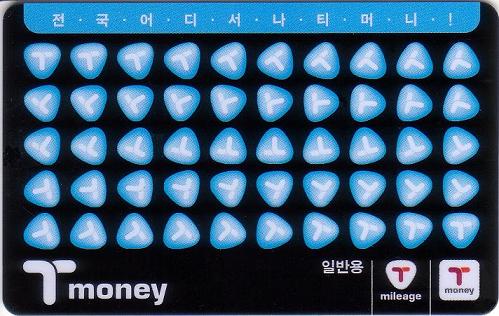
Not necessarily. The photograph shows a real older T-money card, not the full current product range. Confirm the T-money name and supported function with the seller. WOWPASS and Climate Card are different products.
Related guides
Official sources and editorial notes
- VISITKOREA: transportation cards
- Seoul: September 2026 transition and continuing short-term passes
- WOWPASS: official usage and separate balances
Sources checked: September 15, 2026. Routes and practical tips are editorial suggestions, not claims of personal visits. Confirm current opening times, availability and product conditions with the relevant provider before travel.