Jeonbuk Special Self-Governing Province · 전주
Jeonju Travel Guide
Hanok Village walk, food and arrival tips
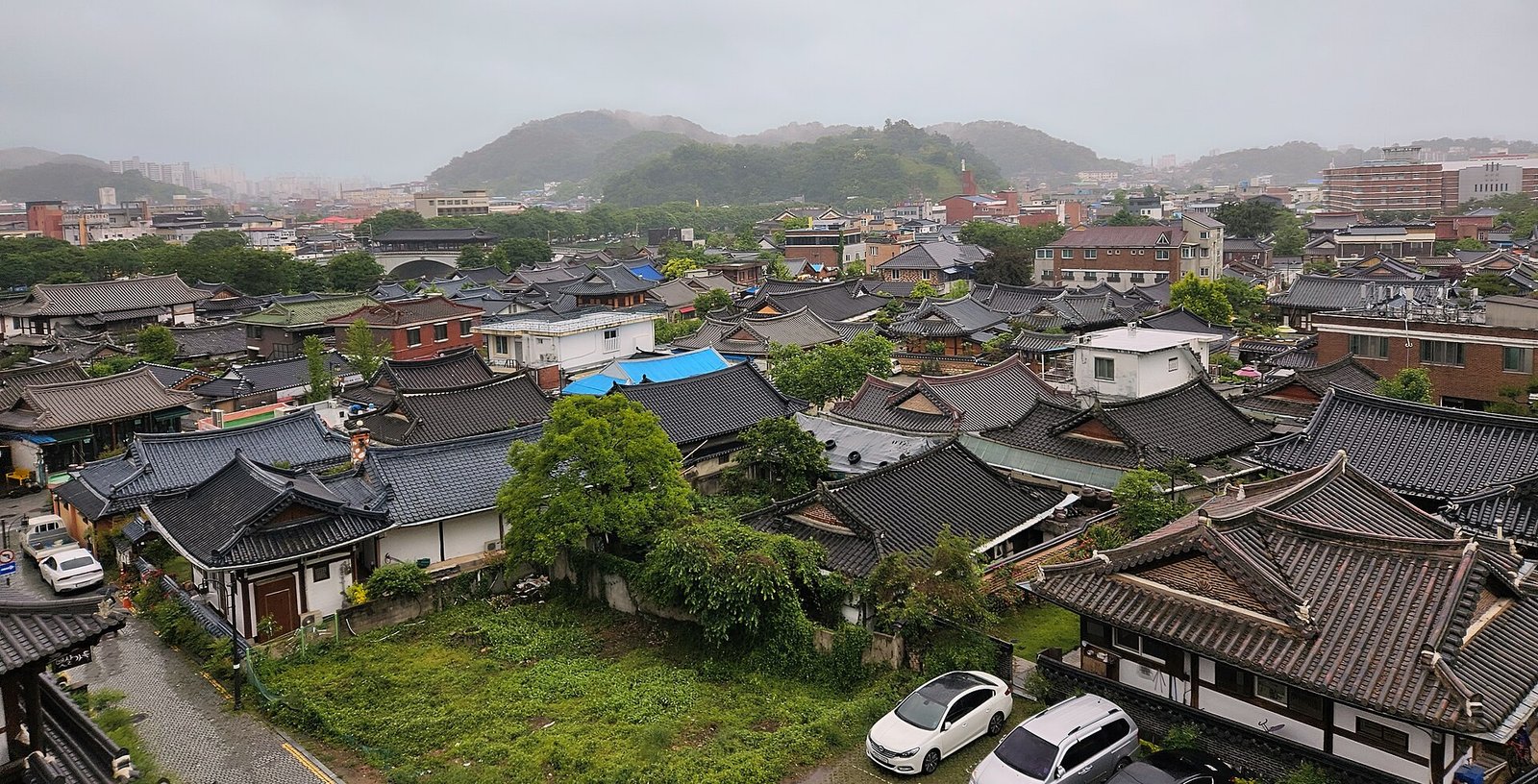
Photo: Jeonju Hanok Village rooftops by lumoplank — CC0 1.0. Hosted and resized for display; crop varies by layout.

For a first Jeonju visit, make Hanok Village your walking base: pair Gyeonggijeon and Jeondong Cathedral with a quieter lane, then add Omokdae only if an uphill route suits your group. Leave time for a proper meal; our Jeonju food guide helps you look beyond bibimbap. Jeonju Station and the bus terminals are outside the village core, so check your arrival route before leaving. Residential hanok lanes deserve quiet, considerate visits.
Don’t miss
Hanok Village
Walk the traditional streets with time for the quieter lanes.
Gyeonggijeon area
Add a heritage stop to give the village more historical context.
Jeonju flavors
Choose a sit-down meal as well as snacks; bibimbap is a familiar starting point.
Plan your visit
| Suggested stay | 1–2 days |
|---|---|
| Getting around | Rail or intercity bus, then local transport to the hanok area. |
| Good for | Hanok · Bibimbap · Heritage |
| Before you go | Check live routes, attraction opening days and the weather. Stay lengths are our planning suggestions, not fixed itineraries. |
For transport setup and arrival preparation, use our first-visit guide.
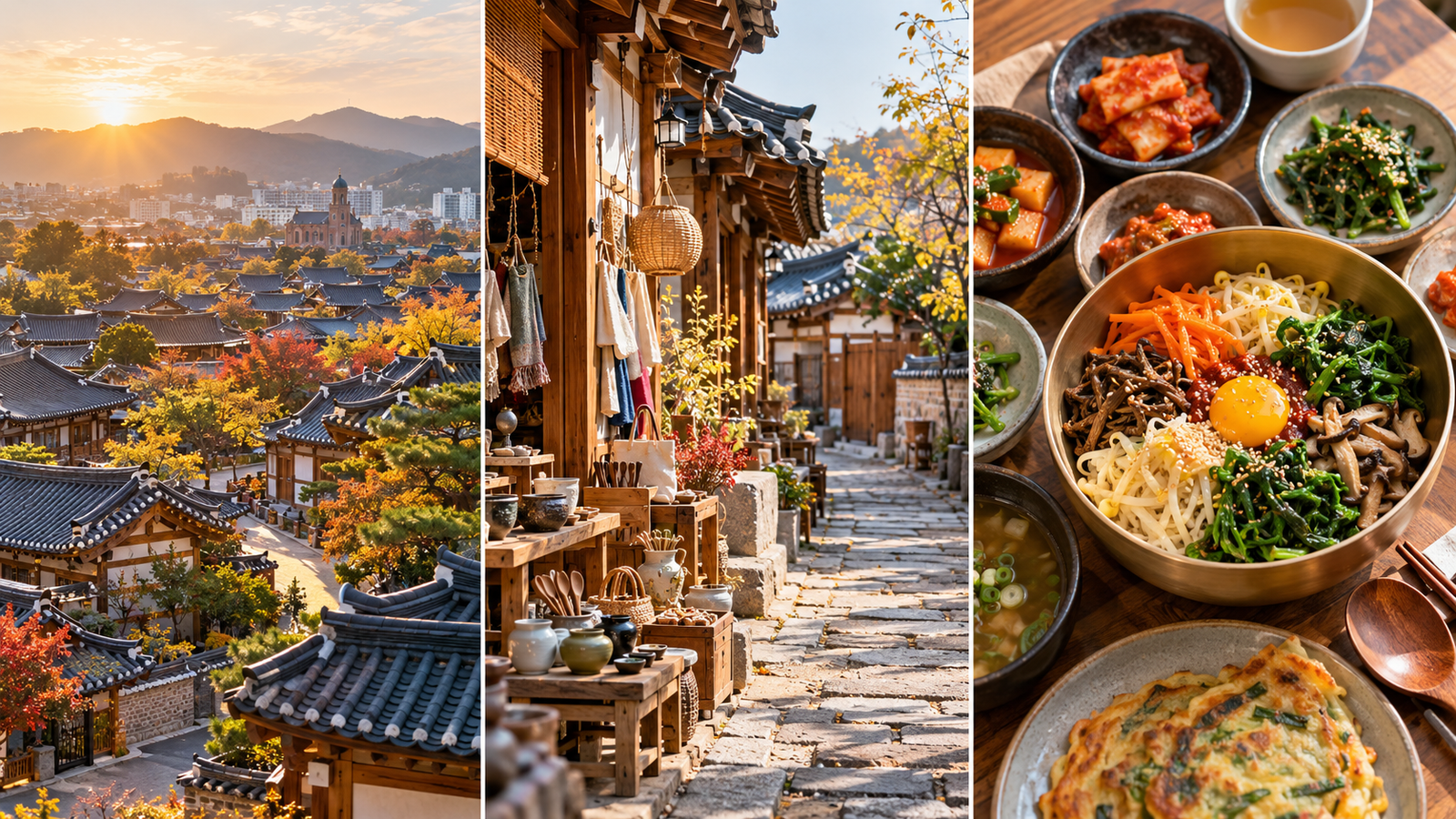
A slower Hanok Village walk is better than a photo-point sprint
Jeonju’s main heritage sights form a walkable area, but a good visit has more than one type of stop. Start with the historical setting at Gyeonggijeon, cross to Jeondong Cathedral, then follow Taejo-ro into the smaller lanes. If your group is comfortable with a short climb, Omokdae offers a view over the tiled rooftops. Jeonju Hyanggyo is a quieter extension beyond the busiest food streets.
Swipe sideways to read all three columns →
| Stop | Why include it | Practical detail |
|---|---|---|
| Gyeonggijeon Shrine | Context for Jeonju’s Joseon history, not just a backdrop for photographs. | Check ticketing and closing time before making it your last stop. |
| Jeondong Cathedral | Distinctive architecture across from Gyeonggijeon. | It is an active place of worship; follow access notices and be considerate during services. |
| Omokdae | A higher view of the Hanok Village roofscape. | There are uphill steps. Skip it in slippery weather or if a level route is important. |
| Jeonju Hyanggyo | A calmer heritage stop away from the densest snack lanes. | Allow enough time to walk back; do not assume it is beside the main gate. |
Arriving without assuming the station is the village
Jeonju Station and the express/intercity bus terminals are separate arrival points outside the core Hanok Village lanes. Search for 전주한옥마을 and your exact accommodation in a live Korean map before choosing a bus or taxi. If you have luggage, ask your lodging where a vehicle can actually stop: the most photogenic inner lanes are not always the easiest drop-off points.
Inside the village, walking is the simplest way to connect the main sights. The official Jeonju Tourism site lists guided walking routes; check the current language, meeting place and operating day before relying on one. A guide can make the heritage stops more meaningful than a quick loop through shops.
Where to pause, eat and stay
Keep one proper meal in the plan. Jeonju bibimbap is a natural choice, but the main tourist lanes also have fast snacks and long queues. Look at the menu and price before joining a line; an attractive snack display is not a substitute for a lunch plan. A craft workshop or hanji stop gives the middle of the day a purpose beyond shopping.
A Hanok Village stay puts early and late walks close to your door, but check luggage access and room facilities. A downtown stay can be more convenient for restaurants and transport. In spring or autumn, weekends can be busy; on a hot or wet day, shorten the outdoor circuit and move the meal or craft stop earlier. Residential courtyards are not public photo locations.
Last reviewed: October 2, 2026. This is an editorial walking sequence, not a claim that every venue was inspected in person. Verify admissions, service access and tours before visiting.
Official references: Jeonju Tourism: Hanok Village attractions · Jeonju Tourism: walking tours.
Related guides: Booking KTX tickets · Dining etiquette in Korea · Finding places with NAVER Map.
Keep exploring Korea
Back to the region map and all 20 city guides →
Last checked: October 2, 2026. Destination reference: Official tourism information. Practical route and pacing tips are Korea Pathbook editorial suggestions. Confirm current access, timetables and fees with the attraction or transport operator.
Weather and average temperature in Jeonju
KMA 1991–2020 climate normals publication. Individual station coverage may be shorter. Annual values describe a long-term climate, not a forecast or monthly temperatures.
| Measure | Climate normal |
|---|---|
| Reference station | Jeonju |
| Annual mean temperature | 13.7 °C / 56.7 °F |
| Annual precipitation | 1,299.3 mm |
Source: Korea Meteorological Administration: regional climate normals. Checked September 15, 2026.
What this means for your visit
Combine outdoor Hanok Village walks with indoor meal breaks. Carry rain protection rather than assuming a whole day will stay dry.
Annual averages do not tell you the temperature on a particular day. Consult the KMA forecast and warnings for your destination before travel.