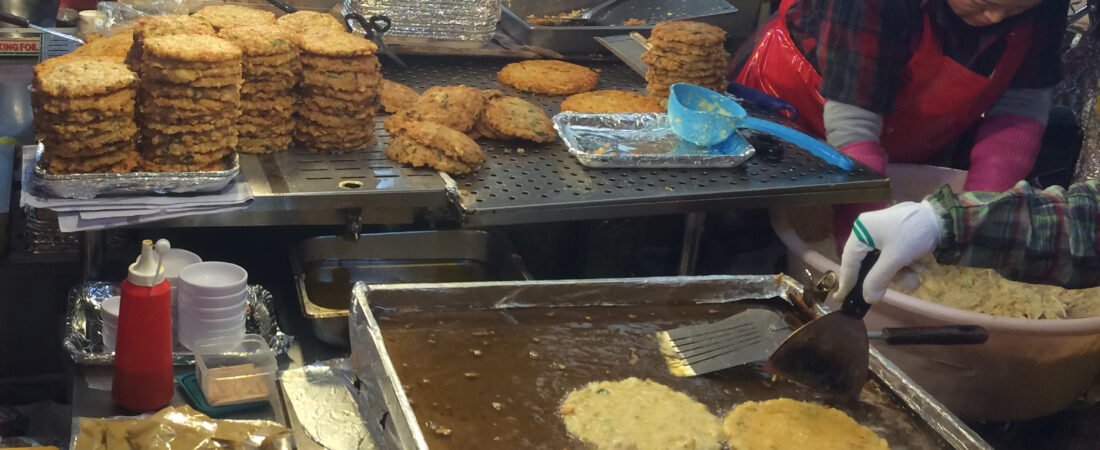
Gwangjang Market is one of Seoul’s easiest places to try several Korean foods in one stop—but the useful question is not “Which stall is famous?” It is “What exactly am I ordering, how much is this portion, and where do I pay?” This guide gives first-time visitors a short, repeatable routine. Menus, queues, prices and payment options belong to individual vendors and can change.
From my market visit: I enjoyed Gwangjang’s lively, noisy atmosphere, but some street-food portions felt small for their asking prices. I would try one or two foods for the experience, then compare the displayed portion and price before turning a snack stop into a full meal. This is my impression of what I saw, not a price judgment about every vendor; the guide does not have a receipt or measured market-wide price comparison.
Plan your visit in 30 seconds
| Question | Practical answer |
|---|---|
| Where? | 88 Changgyeonggung-ro, Jongno-gu, Seoul (광장시장). Search that Korean name in your map app. |
| Best first stop | Enter the food-street section and do one slow lap before choosing a seat. |
| Opening | VISITKOREA lists the general market at 09:00–18:00 and the food street at 09:00–23:00. Individual stalls may keep different hours. |
| Sunday | The main market shops are generally closed; the food street is listed as open year-round. Check the specific stall you want. |
| Payment | Cards are listed as accepted in the market, but ask the individual vendor before ordering; carry another payment option. |
Jongno 5-ga Station is a useful nearby subway reference. Choose the exit from live navigation for the particular entrance you want; “Gwangjang Market” is too large to treat as a single doorway. Our Naver Map guide explains how to save the Korean name.
What to eat first
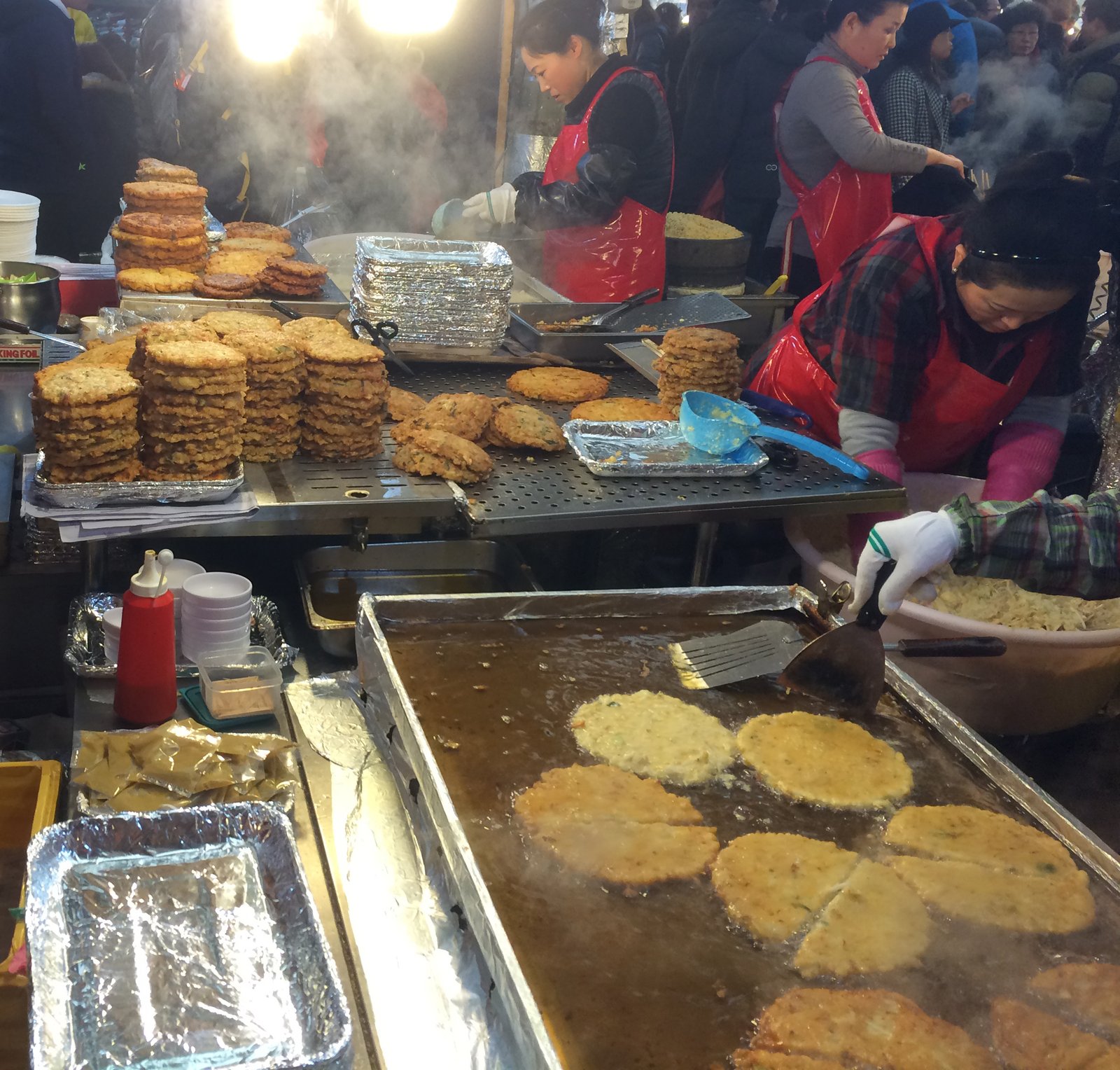
Bindaetteok (빈대떡) is a crisp mung-bean pancake. Watch a vendor cook one and check whether the displayed price is for a whole pancake or a portion. Mayak gimbap (마약김밥) refers to small rice rolls; fillings and serving size vary. Kalguksu (칼국수) is knife-cut noodle soup and makes a more substantial seated meal. Yukhoe (육회) is raw seasoned beef: choose it only if you are comfortable eating raw meat and can discuss dietary concerns with the vendor. None of these is a compulsory “market checklist”; one savory dish and a second snack is enough for an enjoyable visit.
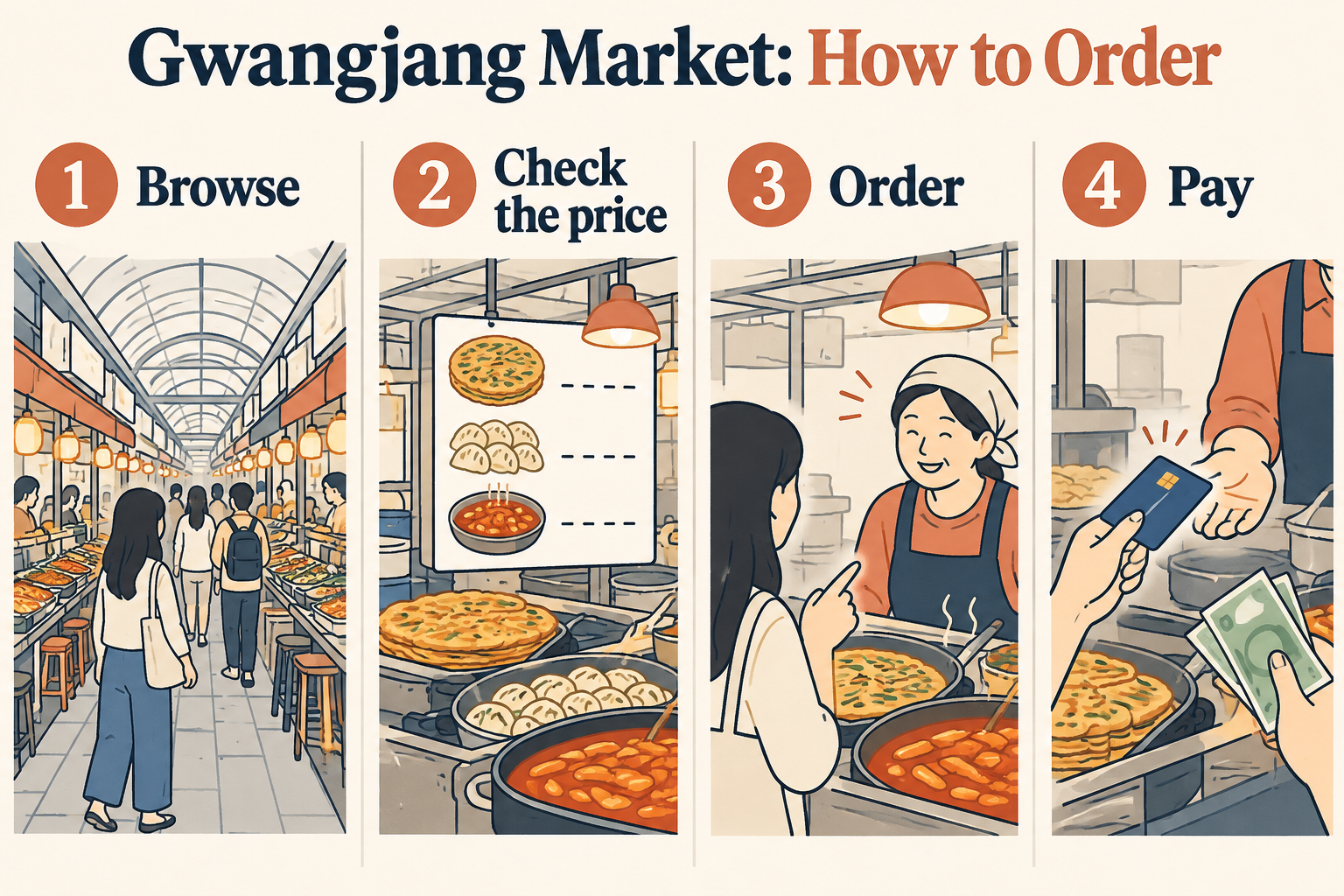
How to order without an awkward surprise
- Walk through once without blocking the aisle or filming people at close range.
- Point to the menu and confirm the unit: one piece, one plate, one bowl or a set.
- Ask the total before preparation: “이거 얼마예요?” (How much is this?) or “두 개면 총 얼마예요?” (How much for two in total?).
- Ask about card payment: “카드 돼요?” (Can I pay by card?).
- After eating, follow that stall’s tray and waste instructions rather than leaving dishes on an unrelated counter.
For mixed plates, a photograph of the price board is helpful for your own reference, but ask first before photographing staff or customers. If a line has no visible end, ask whether it is for ordering, seating or pickup. At a busy counter, a concise order is kinder to both the seller and the next customer.
Food allergies and common mistakes
Recipes can contain wheat, soy, sesame, seafood, egg or other allergens, and shared griddles or oil make cross-contact possible. A stall that cannot confirm ingredients is not a safe choice for a severe allergy. Bring a written Korean allergy explanation and choose a place able to answer it clearly. Also avoid assuming that “vegetable pancake” means a vegetarian cooking surface.
Do not treat an online menu photo or someone else’s bill as today’s price. Read the current sign, clarify the portion and keep your receipt if one is issued. Our broader Korean street-food guide explains other common dishes, while How to Order Food in Korea covers restaurant language beyond markets.
Last checked and sources
Last checked: October 12, 2026 (official visitor information). This is a planning guide, not a claim that we visited or tested every stall.
Photo credit: Bindaetteok at Gwangjang Market, Rystheguy / Wikimedia Commons, CC BY-SA 4.0. Historical image (2016); no changes to the source photograph.
