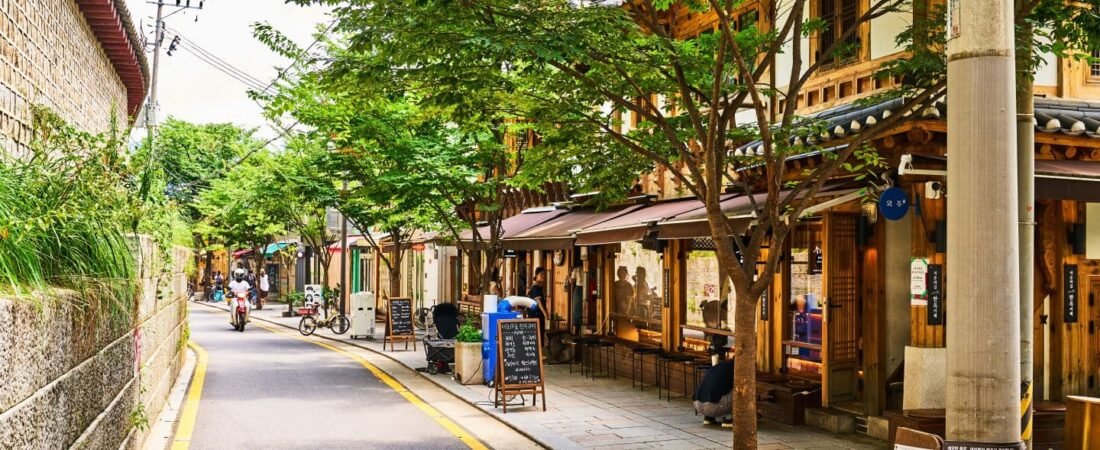
Seosulla-gil (서순라길) is a narrow, tree-lined street alongside the western wall of Jongmyo Shrine in central Seoul. It is an easy change of pace from Jongno’s major roads: on one side, a long stone wall; on the other, small shops, cafés, and older low-rise buildings. The street itself is the attraction. You do not need to book a tour or enter Jongmyo to enjoy the walk.
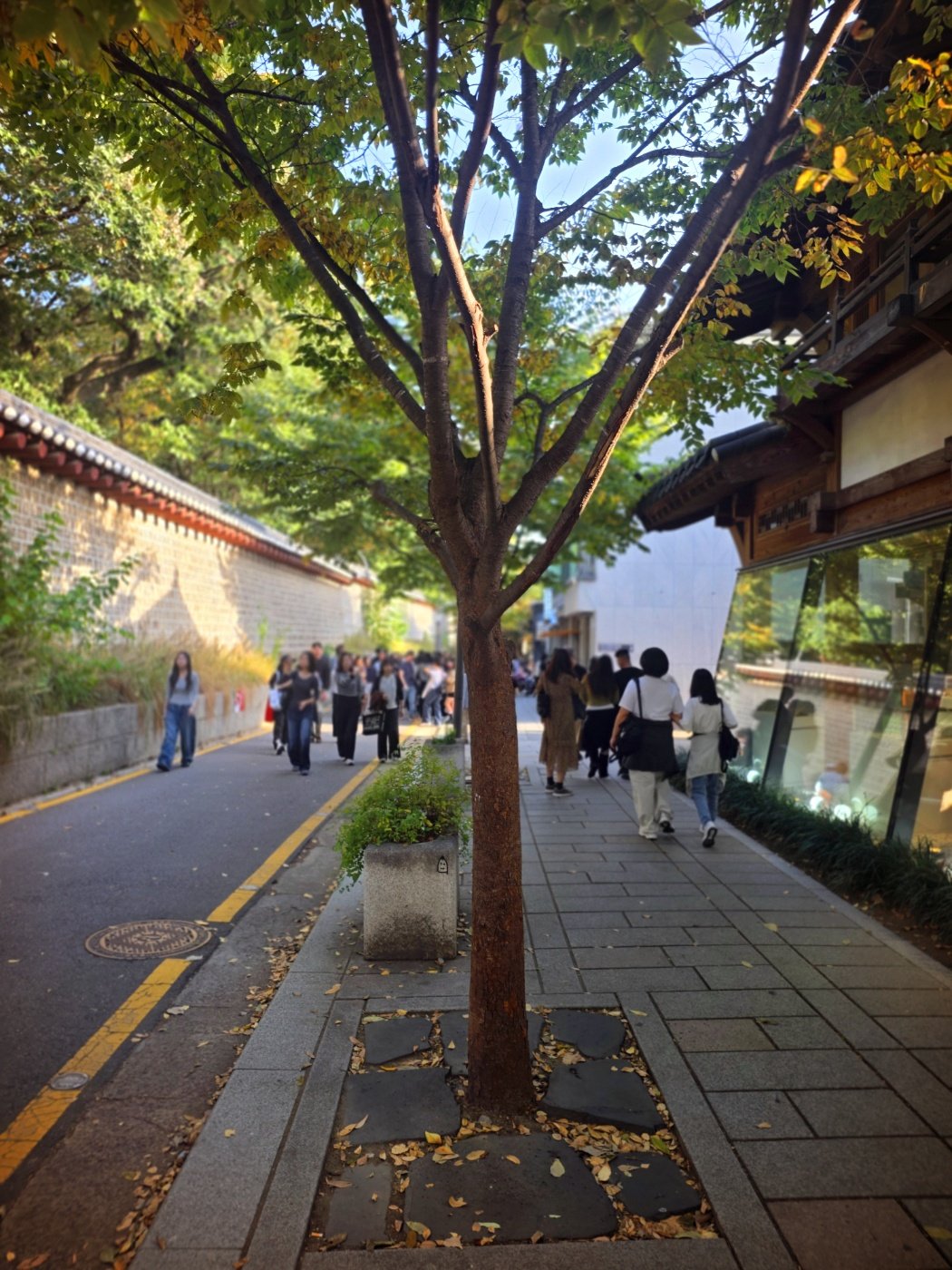
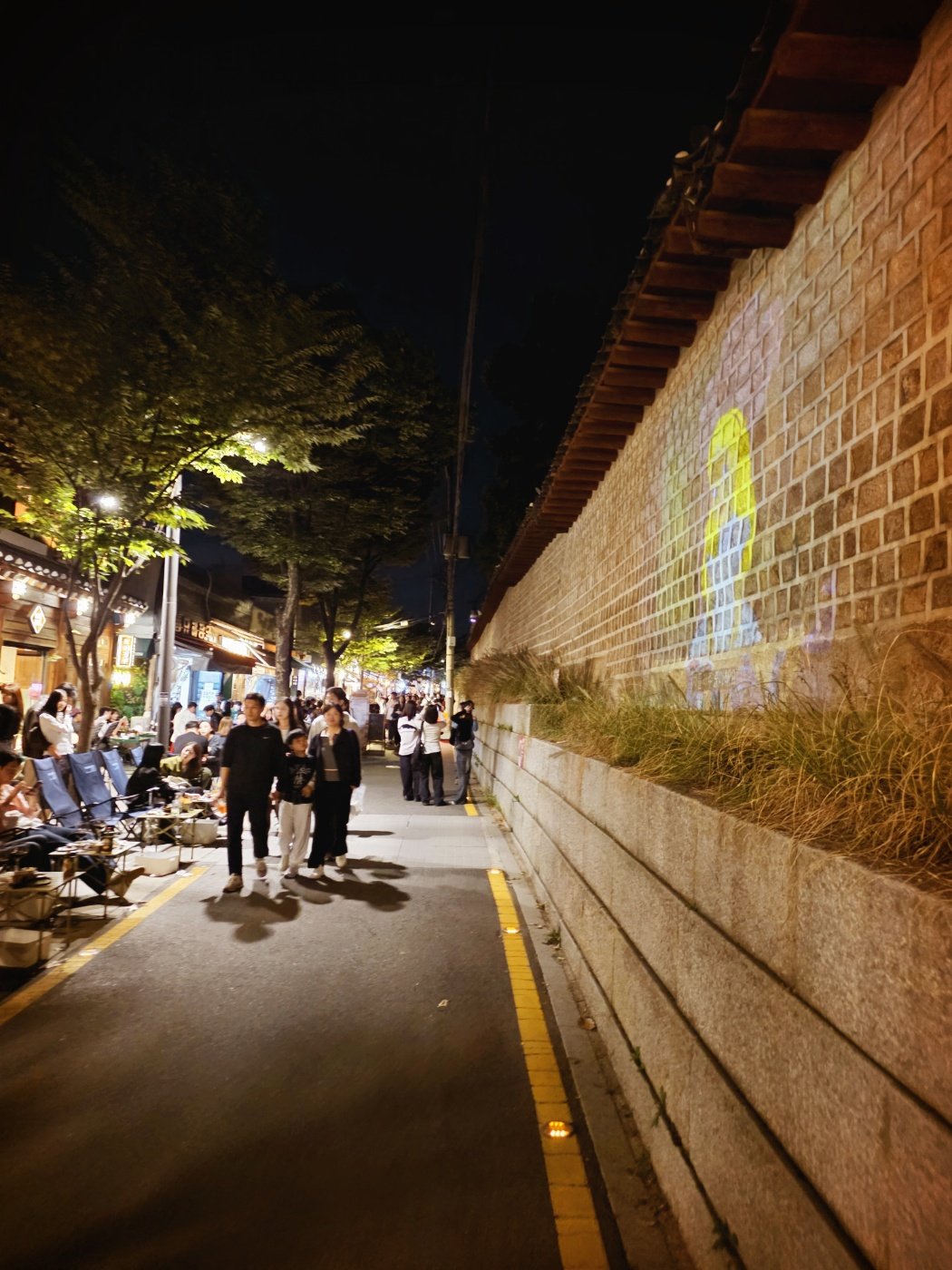
Three photographs supplied for this guide show the contrast I would plan around: in daylight, the Jongmyo wall runs beside leafy shade and small storefronts; after dark, wall lighting and outdoor tables change the mood of the same lane. Choose daytime if you want to notice the street details, or evening if you want the dining atmosphere. This is an observation from the pictured scenes, not a claim that every shop or table will look the same on your visit.
From my walk: I liked seeing people sit and talk at cafés next to Jongmyo’s stone wall. The conversations and café tables belonged to present-day Seoul, while the wall carried a sense of the older city. That coexistence felt distinctive to me and is the reason I would linger here rather than treat the lane only as a shortcut to another attraction.
Seosulla-gil at a glance
| Question | Practical answer |
|---|---|
| Where is it? | Along the west side of Jongmyo Shrine, Jongno-gu, Seoul. Search 서순라길 or Seosulla-gil in NAVER Map. |
| Nearest subway | Jongno 3-ga Station (Lines 1, 3 and 5). Visit Seoul uses Exit 7 and 75 Seosulla-gil as a nearby reference point. |
| How long? | The street is roughly 800 m. Allow 30–60 minutes for a comfortable walk and photographs; add time if you stop for food or crafts. |
| Entry fee? | No fee to walk along the public street. Jongmyo Shrine is a separate attraction with its own visitor information and admission rules. |
| When to go? | Daylight for wall and tree details; early evening for lit storefronts. The street is accessible around the clock, but individual businesses set their own hours. |
Walking times are planning estimates, not a live route or accessibility guarantee. Check current directions and opening hours before setting out.
Why this lane feels different from the rest of Jongno
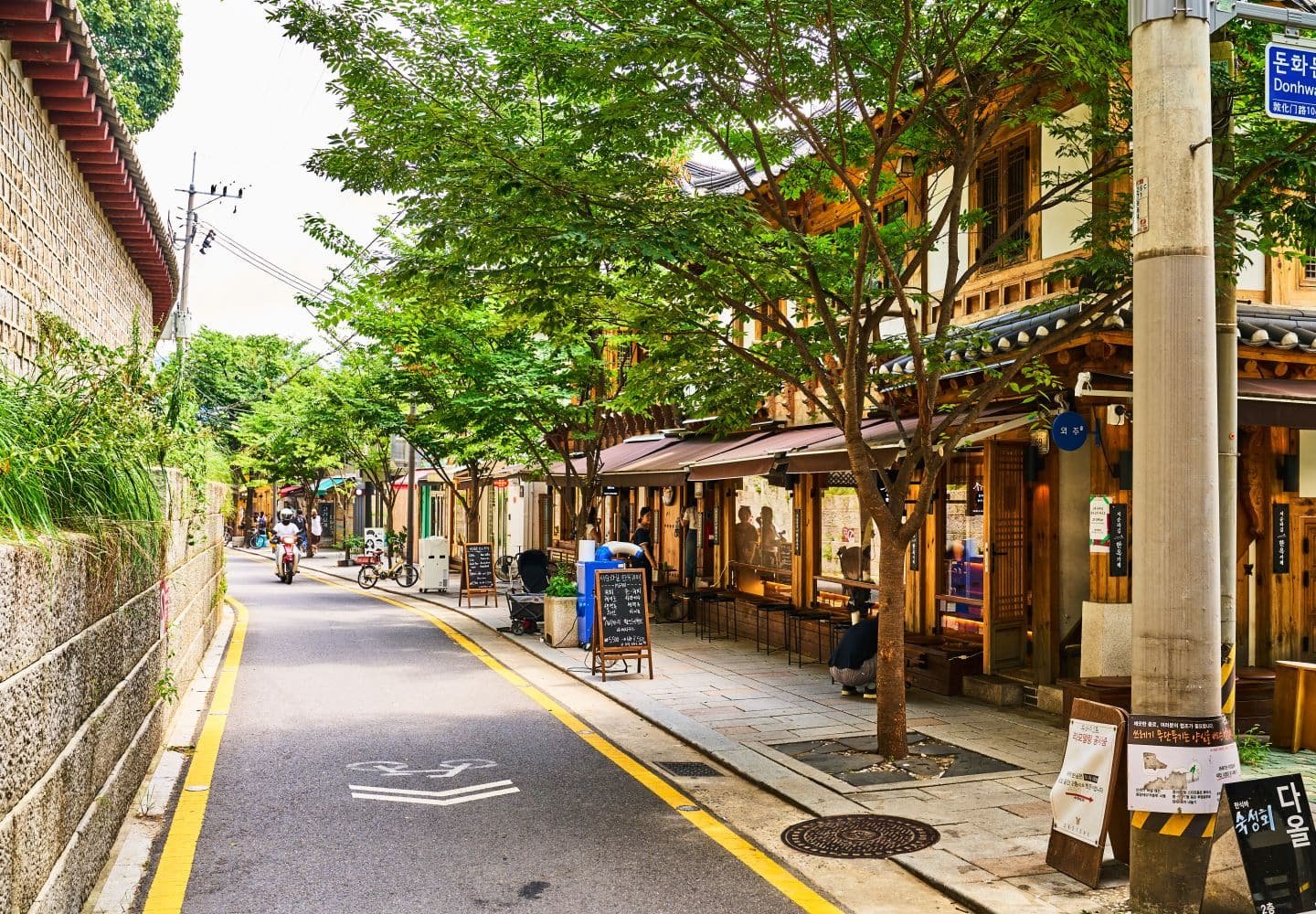
The name refers to the historic route of sunra, night patrol guards of the Joseon era. Today, the wall is still the visual anchor, while the opposite side has cafés, places to eat and craft-related shops. The Korea Tourism Organization describes an approximately 800 m street rather than a single “photo spot.” That is why it is worth walking a stretch of it instead of stopping only at one café.
Seosulla-gil is not a preserved, empty film set. It is a working urban street. The photographs show pedestrians, a vehicle lane and businesses operating beside the heritage wall. Leave room for residents and deliveries, and pause for photos only where you are not blocking a doorway or the road.
How to get there without arriving at the wrong place
- Take the subway to Jongno 3-ga. Lines 1, 3 and 5 meet here. Visit Seoul points to Exit 7 for a Seosulla-gil address, but use the station signs and a live map for your exact starting point.
- Search the Korean street name: 서순라길. If an English search returns a café rather than the street, use the Korean text or a midpoint such as “75 Seosulla-gil.” Save our NAVER Map guide if you need help with Korean place names.
- Follow the Jongmyo stone wall. Once beside it, choose a direction and walk as far as you like. This is a stroll, not a timed circuit; you can return to the station by retracing your steps or continue toward your next Jongno stop.
Do not confuse Jongmyo Shrine with Seosulla-gil when navigating. A map pin for the shrine can take you to its visitor entrance rather than this wall-side street. If the shrine interior is part of your plan, check its official admission and opening information separately.
Day or night: which visit should you choose?
| Go in daylight if… | Go in the evening if… |
|---|---|
| You want to see the wall texture, greenery and shopfront details clearly. | You prefer the glow of cafés and a livelier dining atmosphere. |
| You plan to combine the walk with another daytime Jongno attraction. | You are already visiting Ikseon-dong or Jongno after dinner. |
| You want more predictable natural light for photographs. | You can keep an eye on traffic and uneven edges in lower light. |
The night photograph shows people eating outdoors and light projected onto the wall. It does not mean every part of the lane looks this way every night; lighting, seating and crowds change with the day and weather. For a first visit, arriving before sunset and staying a little after dark gives you both views without a second trip.
A simple Jongno walking plan
Short version (about 45–75 minutes, excluding a meal): Start at Jongno 3-ga Station, reach Seosulla-gil, walk beside the wall at an easy pace, and stop for one drink or a small shop visit if something genuinely interests you. Return the same way if you would rather avoid another navigation step.
Longer version: Make the wall walk your calmer first stop, then continue to our Ikseon-dong and Jongno 3-ga evening guide for a busier food-and-lanes atmosphere. The two places are close enough to pair, but they offer different experiences: Seosulla-gil is about the linear wall-side walk; Ikseon-dong is a network of smaller commercial alleys. If you are planning a wider visit, see the Seoul city guide.
Small details that make the visit easier
- Save the name in Korean. “서순라길” is useful to show a taxi driver or paste into a local map if romanized results are inconsistent.
- Wear ordinary walking shoes. The street is short, but surfaces and crossings can be uneven. If step-free access is essential, inspect the live route rather than assuming the full length is barrier-free.
- Do not assume a café will be open. The public road and private businesses have different hours. Check the specific shop on the day, especially on a holiday.
- Respect the heritage setting. Keep noise down late at night, take litter away, and do not climb or lean equipment against the shrine wall.
- Use official information for Jongmyo itself. Shrine visiting conditions can change; a free wall-side walk does not include admission to the grounds.
Frequently asked questions
Is Seosulla-gil worth visiting if I have only one day in Seoul?
It is most rewarding if you are already exploring Jongno, Jongmyo or Ikseon-dong. The walk is short and low-cost, but it is a quiet street experience rather than a major monument tour. If your schedule is tight, pair it with one nearby stop rather than crossing the city only for a photograph.
Is Seosulla-gil the same as Ikseon-dong?
No. They are nearby but distinct. Seosulla-gil follows the Jongmyo wall; Ikseon-dong is a cluster of lanes known for converted hanok-style venues. You can visit both in one outing.
Can I visit at night?
Yes, the public street remains accessible. Individual cafés and shops may close at different times, and evening lighting or outdoor seating is not guaranteed. Watch for vehicles while walking or photographing after dark.
Do I need a Jongmyo ticket?
Not to walk on Seosulla-gil. Entering Jongmyo Shrine is a separate visit, so check official visitor rules if you want to go inside.
Sources and editorial note
Last checked: 20 October 2026 (Korea time). Route, shop hours and visitor conditions may change. The three street photographs were supplied for this guide; observations about the pictured scenes are based on those images, not a claim that every business was independently tested.
- Korea Tourism Organization: Seosulla-gil Road — location, history and public-street access.
- Korea Tourism Organization: Seosulla Street — approximate length and present-day street character.
- Visit Seoul: Seosulla-gil walking guide — subway access and street reference point.