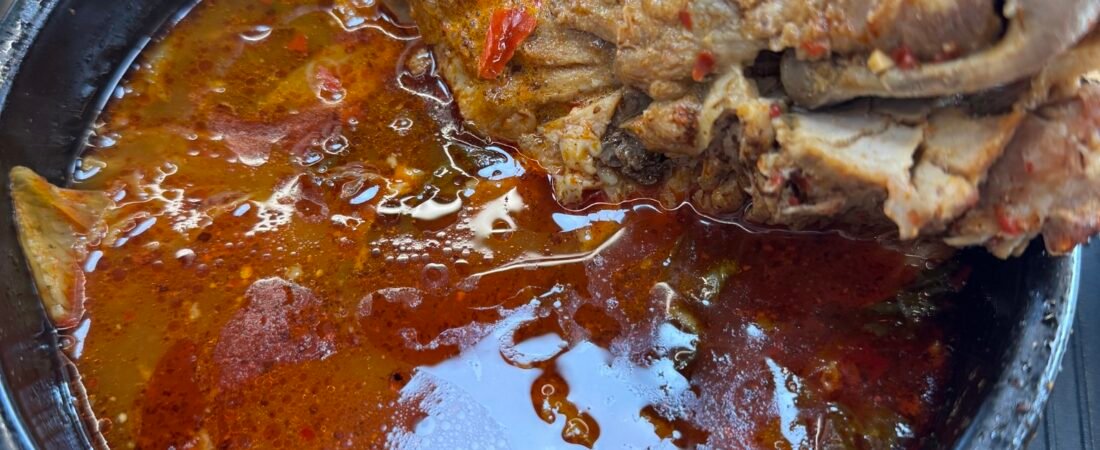
A black bowl of reddish broth arrives with large pork bones rising above the rim. Beside it are rice, kimchi and a small dish of sauce. For a first-time visitor, ppyeo haejangguk (뼈해장국) can look more complicated than it is: the meal is about tender meat around the bones, flavorful soup and small bites of rice. Once you know how to separate the meat, it becomes an approachable Korean comfort-food experience.
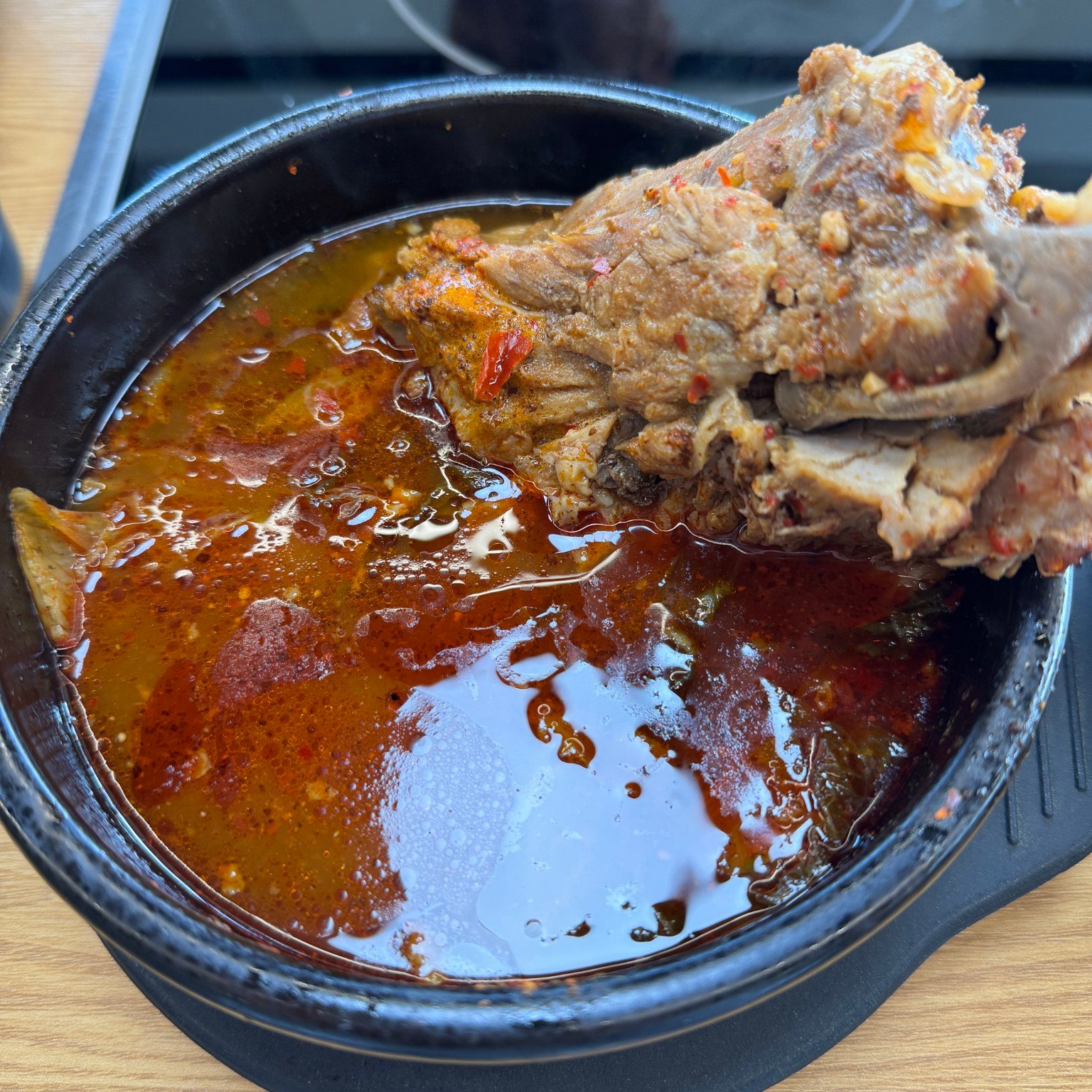
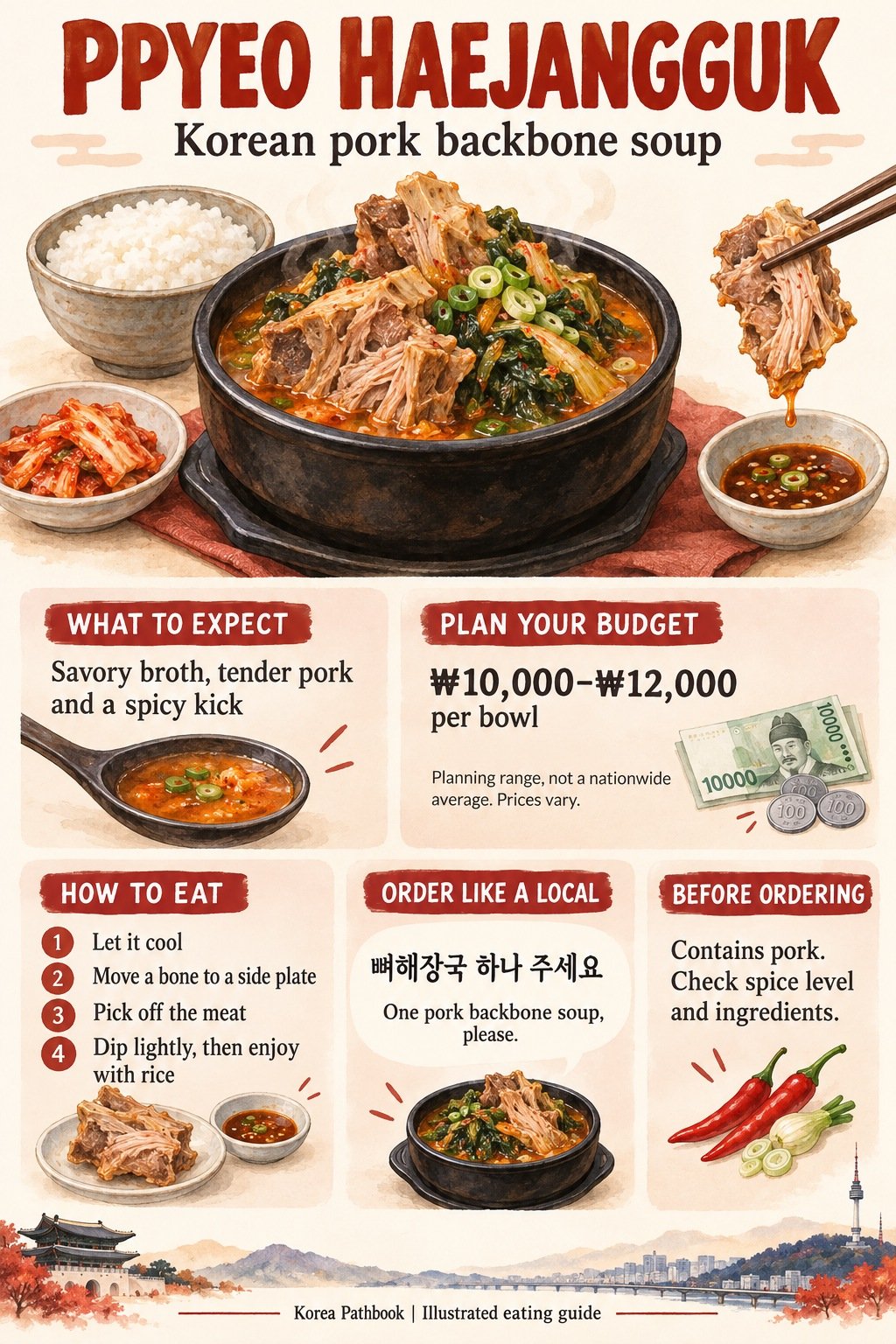
The original meal photographs show the practical sequence: move a large bone to the side plate, separate a small piece of pork, then try it with a little dipping sauce and the greens beside the bowl. That real table scene is more helpful to a first-time diner than treating ppyeo haejangguk as just a bowl of spicy broth. The restaurant name and receipt were not supplied, so this is a guide to eating the dish rather than a review or a verified price for that meal.
My take on the meal: I find ppyeo haejangguk delicious enough to want it regularly, and the price felt reasonable to me for a filling meal. Picking the meat from between the bones is part of the appeal—it makes the bowl feel different from a simple soup. That is a personal taste and value judgment; check the menu at the restaurant you choose for its actual price and portion.
What is ppyeo haejangguk?
In everyday restaurant use, ppyeo haejangguk is a pork backbone soup commonly offered as an individual meal. Ppyeo means bone, while haejangguk is often translated as “hangover soup.” You can order it for an ordinary lunch or dinner; the name does not mean you need to have been drinking.
The Korea Tourism Organization’s guide to pork backbone stew describes a savory, spicy broth with pork, vegetables and perilla powder. Greens may be cabbage, dried radish leaves or aged kimchi, depending on the restaurant. The photos here show substantial bone-in pork, a reddish broth and leafy greens. They do not reveal the complete recipe, so ingredients should be confirmed when ordering.
Ppyeo haejangguk vs. gamjatang: which should you order?
| Menu term | Common restaurant format | Good choice for |
|---|---|---|
| 뼈해장국 · Ppyeo haejangguk | An individual bowl of pork backbone soup. | One person wanting a complete meal. |
| 감자탕 · Gamjatang | A larger shared pork backbone stew, often heated at the table. | Two or more people sharing a pot. |
| 특 · Teuk | A special or larger version of a dish. | A bigger appetite; check the extra cost. |
| 공기밥 · Gonggibap | A bowl of steamed rice. | Checking whether rice is included or extra. |
These are useful menu-reading distinctions, not a rule that every restaurant follows. The Korean Food Promotion Institute’s feature on gamjaguk explains the relationship between pork-bone soup served in earthenware bowls and the shared-pot style of gamjatang. A VISITKOREA restaurant listing also lists gamjatang and ppyeo haejangguk separately. For a solo visit, look for the individual soup before ordering a pot marked small, medium or large.
How much should you budget? Around ₩10,000–₩12,000
For this guide, ₩10,000–₩12,000 per regular bowl is a practical starting budget. It is not a measured nationwide average, and it is not the confirmed price of the photographed meal. Location, portion size, special versions and dine-in versus delivery can change the amount.
| Example checked October 12, 2026 | Listed item | Displayed price |
|---|---|---|
| Pungseong Gamjatang, Seoul — Matzipmap listing | 뼈해장국 | ₩10,000 |
| Wondang Gamjatang, Guro Digital Complex — Diningcode listing | 뼈해장국 | ₩11,000 |
These are third-party menu examples, not a live price guarantee or a recommendation based on a personal visit. Check the restaurant’s own current menu before ordering. Ask whether the rice is included, compare the regular bowl with teuk, and budget separately for drinks or extras. Two regular bowls within the planning range would total ₩20,000–₩24,000 before any additional items.
What does it taste like, and why try it?
The dish is usually savory, warming and more substantial than a light clear soup. Chili seasoning gives many versions a spicy edge, while perilla can add a nutty character. Long cooking makes the meat around the bones easier to separate. Greens absorb the broth and bring another texture to the bowl. Recipes vary: some are thicker and richer, while others taste lighter or more tangy when aged kimchi is used.
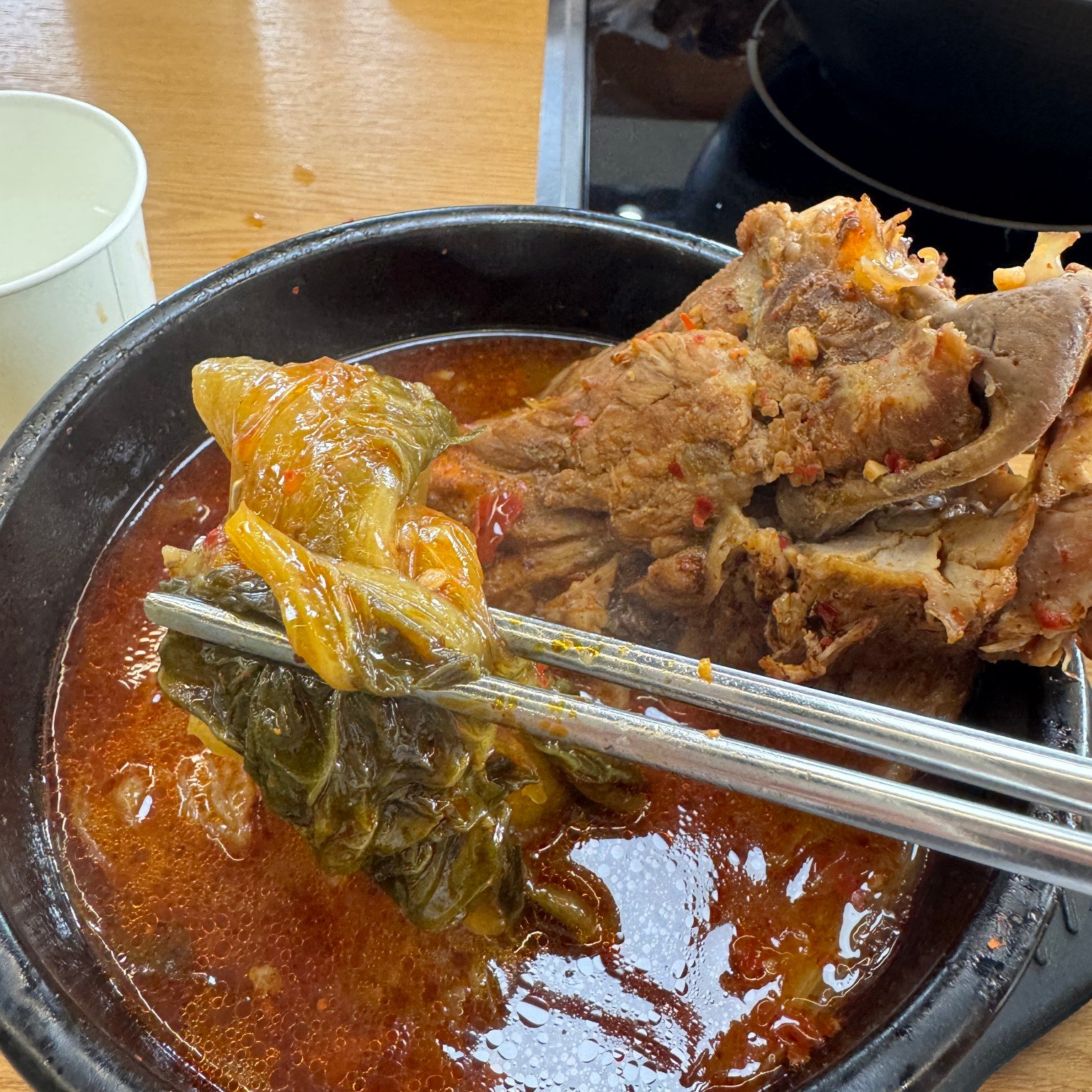
It is an appealing dish to try if you like pork, soup and a filling rice meal. The broth, meat and sides offer several different bites without needing to order many dishes. If you prefer very mild food, ask about the spice level before committing: requesting less spice may not be possible when the broth is prepared in advance. Taste the soup before adding any extra seasoning.
How to eat it: follow the photographs
1. Let the bowl cool and taste a little broth
The bowl and soup may be very hot. Leave the bowl on its tray and start with a small spoonful once it is comfortable to eat. Keep the rice beside the soup at first so you can alternate between them and judge the flavor.
2. Put one bone on the side plate
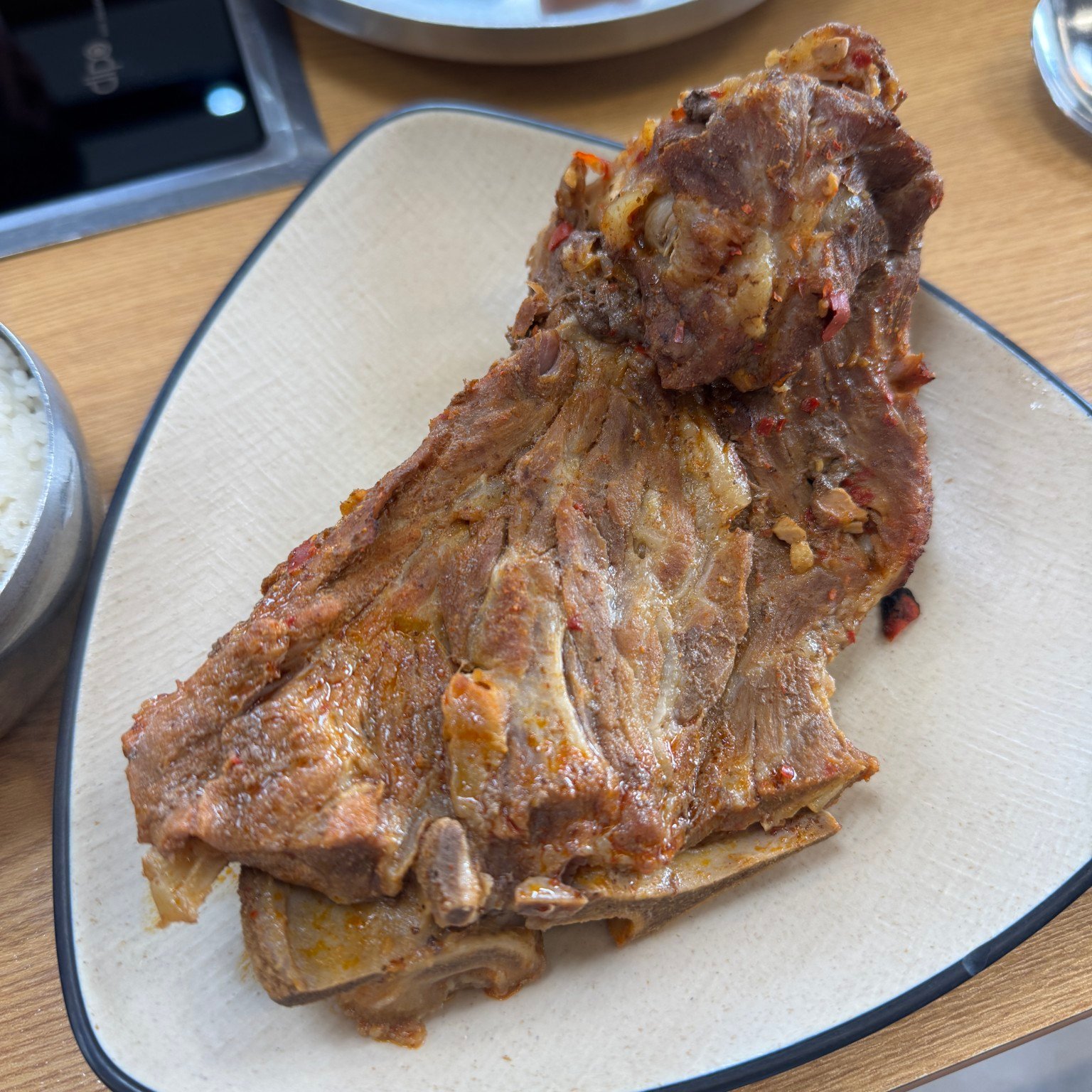
If a side plate or spare bowl is provided, carefully transfer one piece with your utensils. Ask for a plate if you need one. This creates space in the soup and lets you work on a single piece instead of lifting the entire serving. Do not pick up a hot bone with bare hands.
3. Separate the meat with chopsticks
Use the chopsticks to loosen meat from the sides and crevices of the bone, working gently rather than forcing it. If it feels awkward, take your time or ask for a fork. Check each bite for small bone fragments. Put the stripped bones on the spare plate; the bone itself is not something to bite through.
4. Dip lightly, then enjoy with rice and sides
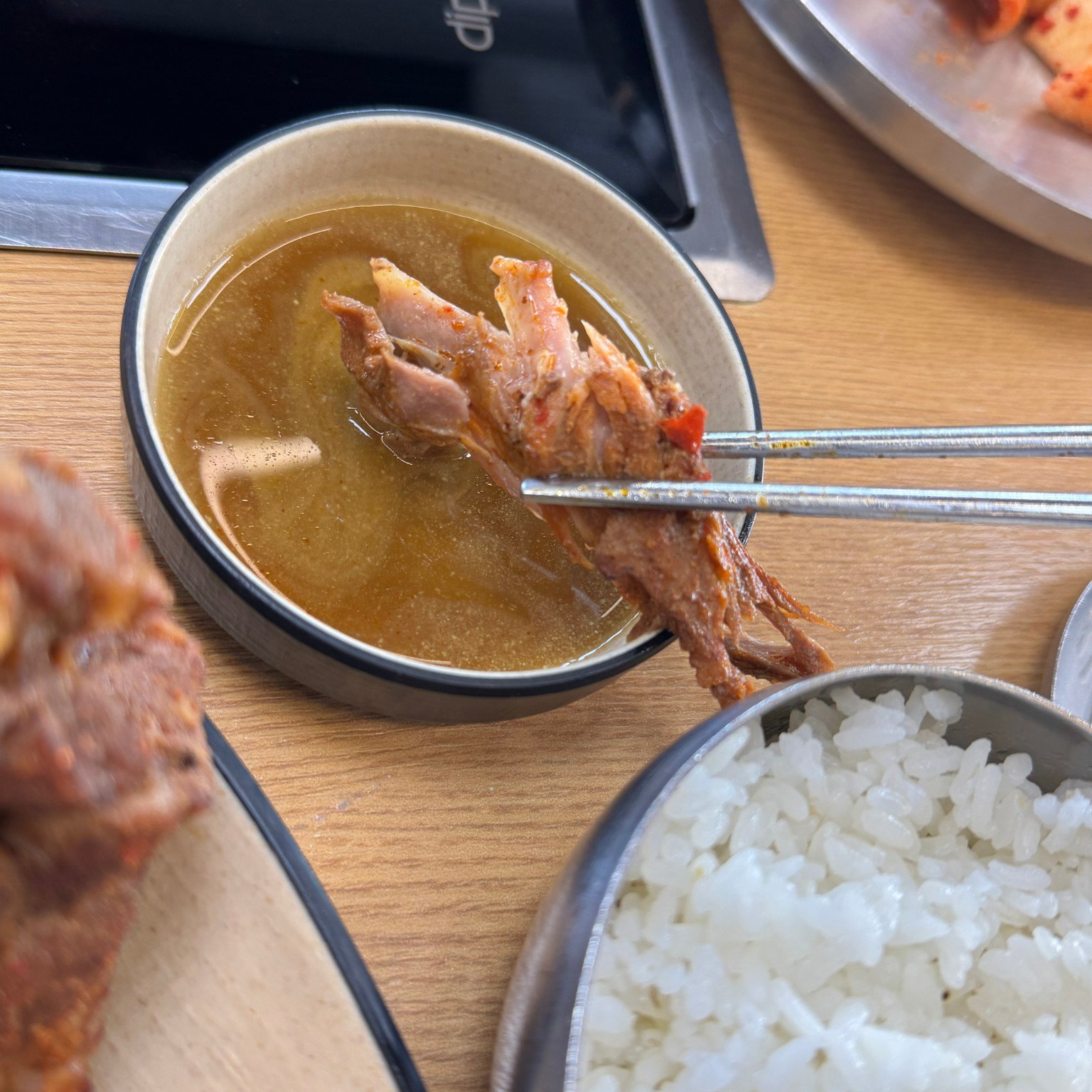
The photo shows meat held over a small sauce dish. Restaurants may use different sauces, so do not assume that every version has the same ingredients or heat. Try a little first. Alternate the pork with rice, greens and kimchi, or add a small portion of rice to the broth if that is how you prefer it. You do not need to put all the rice in at once.
Useful Korean phrases for ordering
| What you want to say | Korean to show the staff |
|---|---|
| One pork backbone soup, please. | 뼈해장국 하나 주세요. |
| Is it spicy? | 많이 매워요? |
| Is rice included? | 공기밥 포함인가요? |
| Could I have a spare plate? | 앞접시 주세요. |
| Could I have a fork? | 포크 있나요? |
Search maps for 뼈해장국 or 감자탕, then check the menu rather than relying only on a restaurant’s English name. For more help at the table, see Korea Pathbook’s culture guides, and explore other dishes in the food section.
A few things to check before ordering
- Pork: the dish is based on pork bones and meat, so it does not suit a pork-free or vegetarian diet.
- Ingredients: sauces, seasonings and side dishes vary. If you have an allergy or dietary restriction, ask about the actual recipe.
- Heat: both the temperature and chili level can be high; start slowly.
- Bones: separate the meat carefully, particularly when helping a child.
- Opening hours: some soup restaurants open late, but a name containing “24” is not a substitute for checking the current branch hours.
Is ppyeo haejangguk worth trying in Korea?
Yes—especially if you enjoy savory pork and a warm, hearty soup meal. The large bones may seem unfamiliar at first, but the eating process is straightforward: cool the soup, move one piece to a plate, separate the meat and enjoy small bites with rice. It is a satisfying way to explore Korean food beyond barbecue, with the broth, greens, meat and sides all contributing to the experience.
Sources and photo notes
Information checked October 12, 2026. Four original meal photographs were selected from the supplied set to show the bowl, greens, bone-separation step and dipping step. Restaurant identity, the exact meal price and the visit date were not supplied. The summary image is an AI-generated illustration. Eating instructions are practical editorial guidance; menu examples are separately linked and may change.
Plan your next step: For the ordering step before your soup arrives, use our guide to ordering food without speaking Korean or the restaurant kiosk checklist. The dining etiquette guide explains common table conventions.
- Korea Tourism Organization: Pork Backbone Stew — flavor and ingredient context.
- Korean Food Promotion Institute: gamjaguk feature — bowl and shared-pot context; historical prices are not used here.
- VISITKOREA: 24si Jeju Haejangguk — separate menu terms.
- Matzipmap: Pungseong Gamjatang and Diningcode: Wondang Gamjatang — third-party price examples.