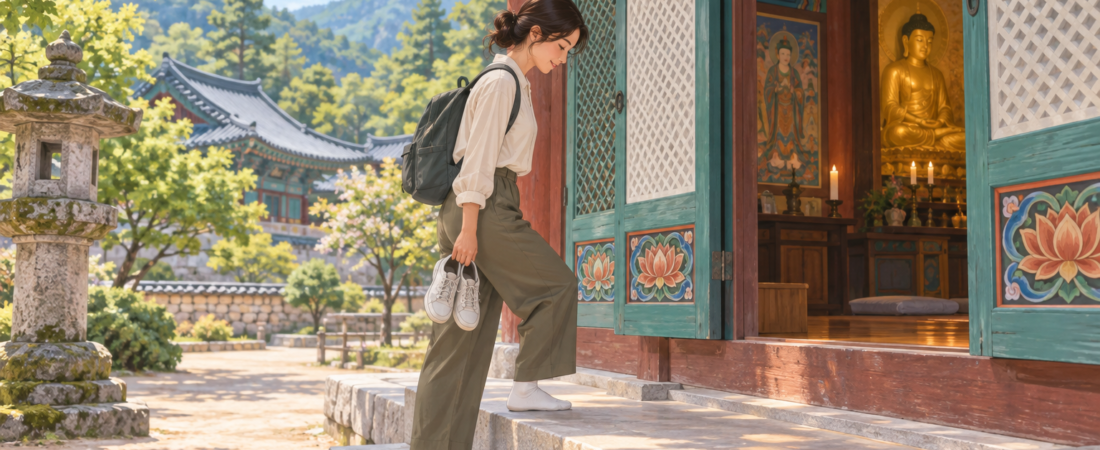
A Korean Buddhist temple may be a visitor attraction, but it is also a place of worship and daily practice. Korean temple etiquette starts with recognizing that difference. Move quietly, follow open-area signs, and let the people using the temple set the pace. You do not need to imitate a religious ritual to visit respectfully.
A short daytime visit is different from joining a booked Templestay program. Do not assume that a public courtyard gives access to residential buildings, meals, ceremonies, or overnight accommodation. The temple’s current instructions take priority over a general travel guide.
Before entering: a quick reference
| Situation | Respectful approach |
|---|---|
| Clothing | Choose comfortable, modest clothes; bring socks for indoor areas. |
| Hall entrance | Check whether visitors may enter and where shoes should be left. |
| Photography | Read signs and ask before indoor photography or photographing people. |
| Prayer or chanting | Observe quietly from an allowed place; do not interrupt. |
| Closed doors or private paths | Stay out unless staff invite you. |
| Meals or overnight stay | Arrange participation through the actual program, not by arriving unannounced. |
Shoes and clothing
Wear shoes that are easy to remove and comfortable for slopes or uneven paths. At a shoe-off boundary, leave them neatly where indicated. Keep a clean pair of socks available; official Templestay guidance at Woljeongsa specifically asks for socks and modest clothing. That is a useful preparation example, but each temple can provide its own requirements.
Local-style practical tip: Carry a light extra layer rather than arriving in clothing that leaves you uncertain about entering a hall. A small bag is easier to manage than a large backpack near doorways and seated worshippers.
Inside a hall: observe first
Pause at the entrance, read any visitor notice, and use the designated door. Choose an unobtrusive place if visitors are permitted to sit. Silence your phone before entering. Avoid stepping across cushions or walking between somebody and the object of their prayer when another route is available.
If you want to learn a greeting or bow, ask the guide to demonstrate. If a movement is uncomfortable or conflicts with your beliefs, explain briefly and ask how you can observe respectfully. Do not treat a ceremony as a performance arranged for your camera.
Photography and shared space
An outdoor photo may be allowed while photography inside a hall is restricted. Permission in one area does not extend to every building. Do not use flash, tripods, drones, or filming equipment without checking the relevant rules. Avoid photographing worshippers close up unless they explicitly agree.
Local-style practical tip: Take your general courtyard photo first, then put the phone away for a few minutes. You will notice the path boundaries, shoe areas, and flow of visitors more easily when you are not watching a screen.
If you are considering Templestay
Read the specific program description for language support, activity level, sleeping arrangements, meals, arrival time, and cancellation conditions. Programs differ: some emphasize rest, while others schedule activities. Check what is optional instead of assuming every listing includes the same ceremony or conversation with a monastic.
- Tell the program about mobility or dietary needs before booking.
- Check transport to the temple and the return journey.
- Pack the clothing and toiletries the listing actually requests.
- Follow quiet hours and the agreed schedule.
- Do not bring alcohol or plan to smoke on temple grounds.
FAQ
Can non-Buddhists visit? Many visitor areas and programs welcome people with different backgrounds; confirm access and program conditions with the temple.
Is every temple accessible without stairs? No. Ask about the precise route and facilities if you need step-free access.
Related guides
Useful Korean phrases · Plan the journey · First-trip checklist
Sources and checks
Last checked: September 14, 2026. This guide combines the linked reference information with practical travel suggestions. Venue policies and services can change; follow current signs and staff guidance.

