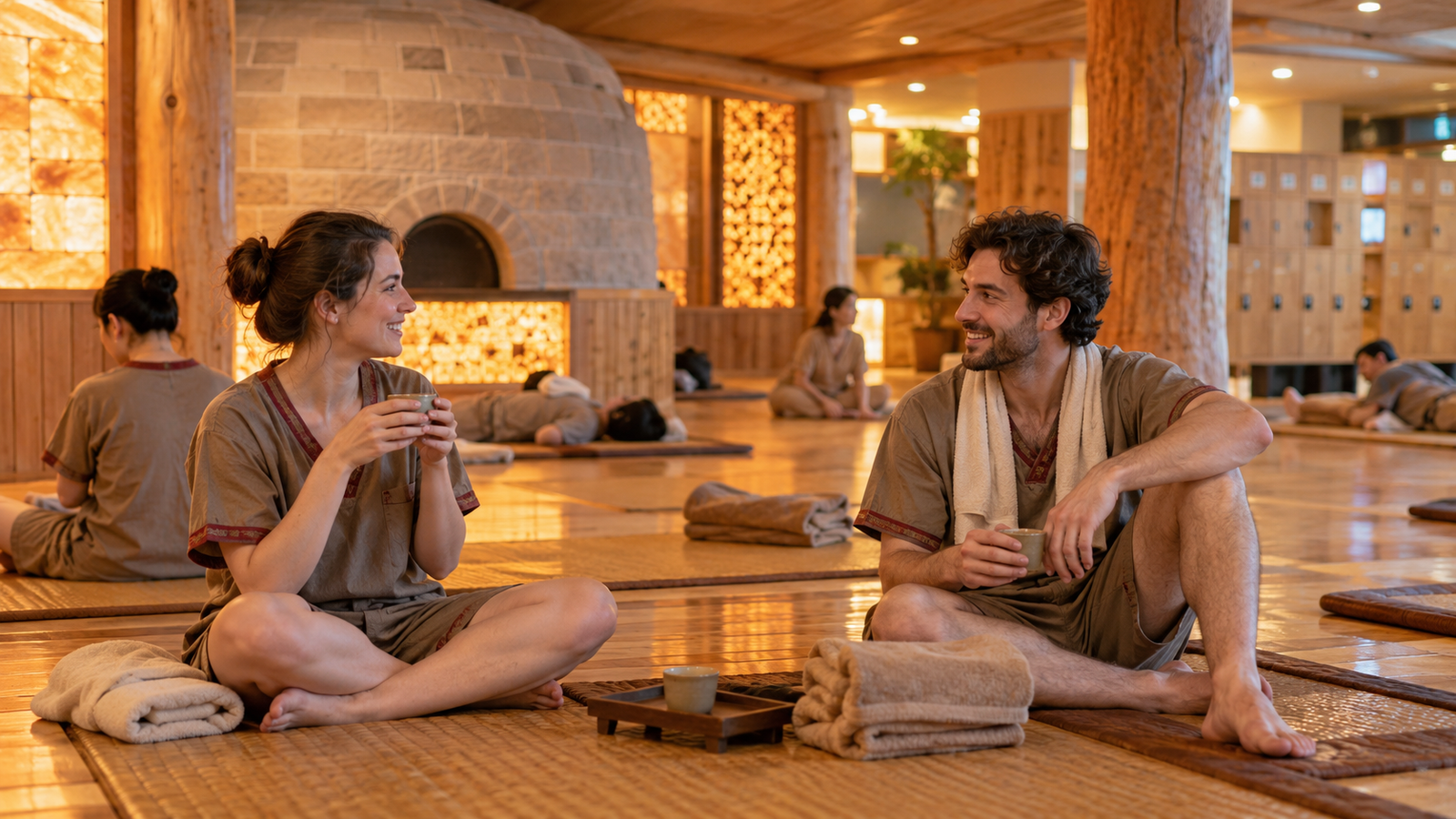
A Korean jjimjilbang combines bathing facilities with heated rooms and shared rest areas. For a first visit, the difficult part is not the sauna heat—it is understanding where shoes, clothes and towels belong. Once you know the sequence, the experience is much easier.
Facilities differ in layout, admission time, tattoo policy, child rules and overnight access. Check the venue’s current notice before visiting, especially at late night.
What happens from entrance to exit
| Stage | What you usually receive or do | Important detail |
|---|---|---|
| Entrance | Pay and receive a locker key or wristband | Ask what time you must leave |
| Shoe area | Store outdoor shoes in a small locker | Do not walk past the shoe line in outdoor shoes |
| Changing room | Use the matching locker number | Keep valuables secured |
| Bathing area | Wash before entering a bath | No clothing; areas are gender separated |
| Common area | Wear the provided shirt and shorts | Shared areas are fully clothed |
| Exit | Return items and settle extra charges | Check the wristband balance if purchases were added |
1. Check the venue before you go
Search the exact facility name in NAVER Map and read the newest official notice or recent visitor updates. Do not assume that an old blog’s opening hours, overnight policy or entrance price still applies. Some venues sell separate sauna-only and full jjimjilbang tickets.
Local tip: Visit earlier in the evening for a calmer first experience. Late-night entry rules can be stricter, and popular facilities are busiest on weekends and public holidays.
2. Store your shoes before entering
At the entrance, there is usually a clear point where outdoor shoes stop. Place them in the small shoe locker and keep the key or exchange it at the desk, depending on the facility. In Korea, crossing the clean floor in outdoor shoes is a noticeable etiquette mistake.
3. Use the correct changing room
Staff will direct you to a gender-separated changing and bathing area. Find the locker that matches your key or wristband number. Put your clothes and larger belongings inside. Avoid leaving a phone, passport or wallet on an open bench.
The wet bathing area is normally unclothed. The shared sauna lounge is different: you wear the provided cotton shirt and shorts there. If you are unsure where clothing changes, watch the signs or ask staff before passing through a door.
4. Wash before entering the baths
Use a seated shower station or standing shower and wash thoroughly before soaking. Keep the small towel out of the bath water; place it on your head or beside the bath. Tie up long hair so it does not touch the water. Move quietly and give other guests space.
5. Try the heated rooms slowly
After bathing and changing into the provided clothes, explore the shared common area. Heated rooms vary from mild to very hot. Start with a cooler room, stay for a short time and drink water. Leave immediately if you feel dizzy, nauseated or unusually tired.
Jjimjilbangs are not a test of endurance. Alcohol, dehydration and intense heat are a poor combination. People with health concerns should follow medical advice and choose mild temperatures or skip the hottest rooms.
Etiquette that matters most
- Do not take photos or videos in changing rooms or bathing areas.
- Keep phone use discreet in common lounges and follow posted rules.
- Speak quietly near sleeping and resting guests.
- Return towels and clothes to the marked collection point.
- Do not reserve a large area with bags or bedding.
- Ask about tattoo rules in advance; policies differ by venue.
What to bring
| Item | Why it helps | May be available there? |
|---|---|---|
| Transit card or payment card | Admission and transport | Payment methods vary |
| Hair tie | Keeps long hair out of bath water | Sometimes sold |
| Basic toiletries | Useful if you prefer your own products | Soap may be provided; other items vary |
| Clean underwear | Comfort after bathing | No |
| Small water bottle | Hydration after heat | Drinks are commonly sold |
Useful Korean phrases
찜질방은 어디예요? — Where is the jjimjilbang area?
수건은 어디에 반납해요? — Where do I return the towel?
몇 시까지 이용할 수 있어요? — Until what time can I use the facility?
Frequently asked questions
Can couples stay together?
Couples separate for the gender-specific changing and bathing areas, then can meet in the clothed common lounge.
Can I sleep overnight?
Only if the specific facility permits it. Overnight access, entry cutoffs and sleeping spaces can change, so confirm directly before relying on a jjimjilbang as accommodation.
Are tattoos allowed?
There is no single rule for every venue. Ask the facility, especially for large or visible tattoos, and follow staff instructions.
Related culture guides
What the first 15 minutes usually look like
- Pay at reception and confirm whether towels, clothing and a locker key are included.
- Separate shoes at the entrance if the venue provides a shoe locker.
- Follow the sign for the correct changing and bathing area; these areas are normally gender separated.
- Wash before entering shared baths. Keep the small towel out of the water.
- Change into the provided clothes before entering the mixed jjimjilbang rest area, if the venue has one.
Local tip: do not assume every sauna is a 24-hour destination. Neighborhood bathhouses, hotel saunas and large jjimjilbangs can have different facilities, access rules and overnight policies.
How this guide was prepared: this is a common-use orientation, not a rulebook for every venue. Check the posted signs and ask staff about tattoos, children, luggage, overnight stays and re-entry because policies differ.
Last checked: October 1, 2026
Verification note: Always confirm current hours, admission rules, tattoo policy, child access and overnight use with the individual facility.