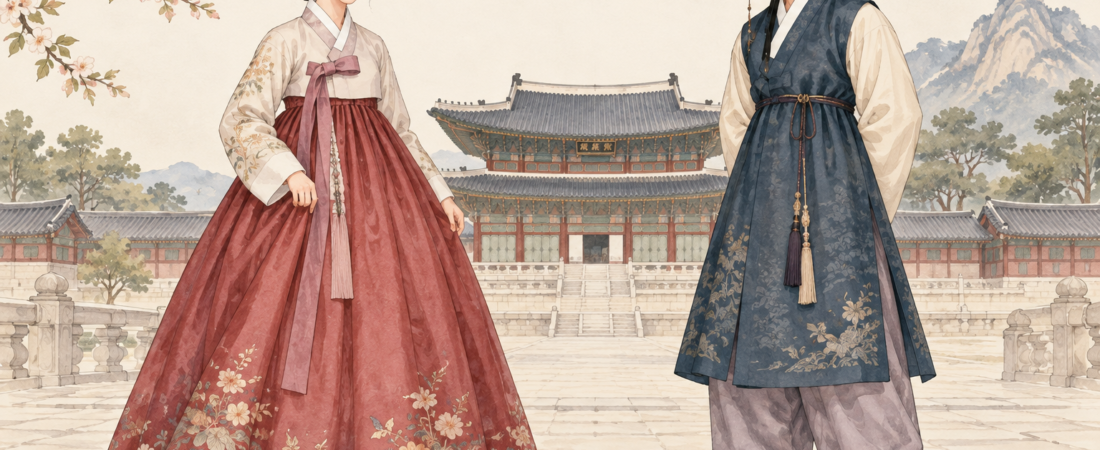
“Wear hanbok and enter for free” is useful shorthand, but it can mislead visitors into renting the wrong outfit. The Royal Palaces and Tombs Center sets a clothing standard: a qualifying outfit needs both an appropriate upper garment and a lower garment. Foreign visitors may qualify on the same basis as Korean visitors. Free palace admission does not mean the hanbok rental, a separately ticketed program or a special exhibition is free.
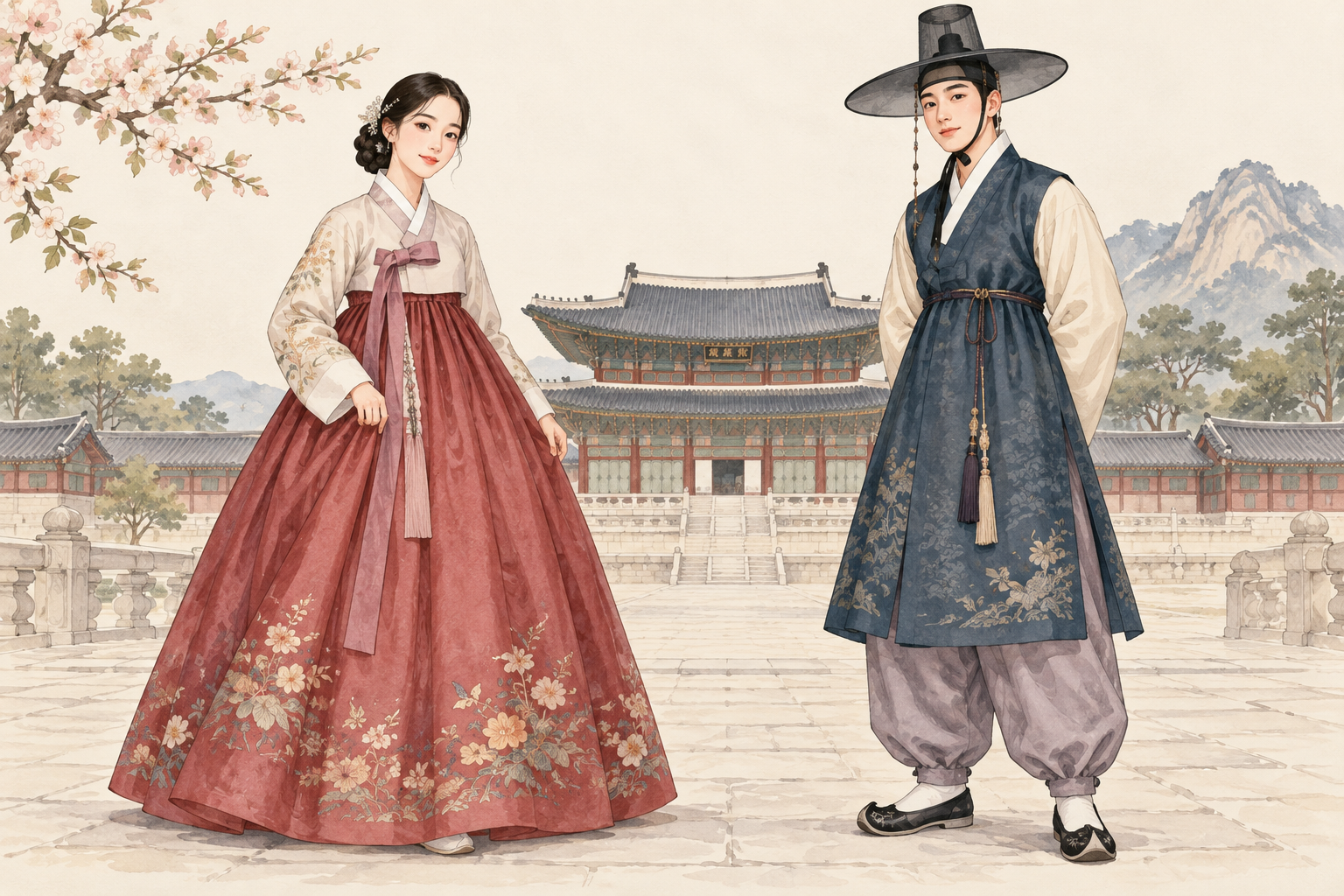
The rule in one glance
| Outfit example | Likely result under the official guideline | Why |
|---|---|---|
| Jeogori jacket + hanbok skirt (chima) | Qualifies when worn properly | Both upper and lower pieces are present. |
| Jeogori jacket + hanbok trousers (baji) | Qualifies when worn properly | Both pieces are present. |
| Jeogori with jeans | Does not qualify | Only the upper garment is hanbok. |
| Hanbok skirt with a T-shirt | Does not qualify | The upper garment is missing. |
| Overcoat only | Does not qualify | A durumagi alone is not a full outfit. |
The English official guidance accepts both traditional and modernized hanbok, but it says the upper garment must be a proper jeogori, fastened or tied; a T-shirt-style top is not accepted. The operator’s Korean Q&A adds useful examples: a one-piece dress without a separate jeogori does not qualify, while a waist skirt can qualify with a jeogori that reaches the waist. Staff at the entrance apply the rule in practice. If a rental set looks borderline, ask before paying for it.
What to ask the rental shop
- “Is this a full hanbok outfit for palace free admission?” Point to the official rule if needed, rather than relying on a shop’s advertising slogan.
- “Does the rental include the jeogori and chima or baji?” Check the actual garments, not just a decorative overcoat or accessory.
- “When exactly must I return it?” Your palace visit, photo stops and travel back to the shop all consume rental time.
- “What is included in the posted price?” Hair styling, bags, accessories, lockers and late returns may have separate terms.
Bring an ordinary backup outfit for changing and consider the weather. In summer, the main problem may be heat while queuing; in winter, a thin rental set may need a warm layer. Do not assume a visually elaborate outfit is more comfortable. Keep the jeogori on while inside if it is part of the qualifying set.
Where does free entry apply?
The official rule is for designated royal palace and heritage admissions. Read the rule for the exact site you plan to enter and remember that some experiences have separate tickets. At Changdeokgung, for example, its Secret Garden has a separately managed admission and reservation process. A hanbok should not be treated as a guaranteed free Secret Garden ticket. Likewise, a night opening or a reserved building tour can have different conditions from ordinary grounds entry.
FAQ for overseas visitors
Do foreigners qualify? Yes. The official Korean Q&A explicitly says the rule is not limited by nationality. Does a modernized hanbok count? It can, provided it meets the garment requirements; a simple T-shirt-style top is not enough. Can I mix hanbok and everyday clothes? The official guidance specifically rejects jeogori with jeans and skirt or trousers with a T-shirt. Do children need the same complete outfit? Check the current admission categories as some ages may already receive free admission; do not rent an outfit solely to save a ticket without checking.
If you are choosing a palace first, read our three-palace comparison. The best rental location is usually one you can return to comfortably after the visit, not merely the first shop with a low headline price.
Sources and update note
Last checked: October 14, 2026. Source-based guidance; no claim that we tested a particular rental shop or palace gate. Recheck rules, special programs and opening notices for your visit date.