The simplest Korean cafe etiquette rule is to check the shop’s own setup. A small dessert cafe, a busy bakery, and a study-friendly chain may have very different expectations. Ordering a drink does not automatically promise unlimited seating, a power outlet, or permission to work for the afternoon.
Use this guide as a practical checklist, not a nationwide rulebook. If you want a long laptop session, verify that policy before buying. If you only need a quick coffee, choose the takeout option and leave the tables available for customers staying inside.
Common cafe signs and what to check
| Sign or situation | Meaning / next step |
|---|---|
| 매장 / 포장 | For here / takeaway. Select how you actually plan to use the order. |
| 1인 1음료 | One beverage per person. Ask how the rule applies to children or shared desserts. |
| 반납 | Return point. Bring used cups and trays here if instructed. |
| 노트북 사용 제한 | Laptop use is restricted. Ask about permitted seats or hours. |
| Last order / closing time | Ordering may end before the doors close; check both times. |
Before ordering: check seats and the queue
If the cafe is crowded, ask whether you should find a seat first or order first. Do not assume an empty-looking table is available when a coat or tray remains on it; ask staff. Keep valuables with you rather than using a phone or wallet to hold a seat. For a group, confirm the per-person order policy before sharing one dessert.
Local-style practical tip: Save two nearby cafes in your map app. If your first choice is full or unsuitable for laptops, a ready backup avoids an awkward negotiation over a small shop’s rules.
Order clearly and collect the right drink
Decide on hot or iced, the drink size if offered, and dine-in or takeaway. Point to the exact menu item when similar names are confusing. If you need decaf or a milk alternative, ask whether that option exists and whether there is an extra charge. A non-coffee drink is not automatically caffeine-free, and a plant-based milk option does not establish allergy-safe preparation.
Keep the receipt, order number, or pager until collection. At the pickup area, match your order instead of taking the first similar-looking cup. Move aside once you have collected it so others can reach the counter.
Laptops, photography, and noise
Choose a small table when alone. Do not block the next seat with your bag when people are waiting. Use headphones, avoid speakerphone calls, and ask before plugging into an outlet in an unusual location. If the shop limits laptop use, respect the limit or change venues; buying another drink does not automatically cancel that policy.
A photogenic interior is still a working business. Photograph your own drink without leaning over other tables or rearranging furniture. Ask before recording identifiable staff or other customers. Be especially careful in small cafes beside homes, where an outdoor photo queue can obstruct residents.
Return the tray and sort only where indicated
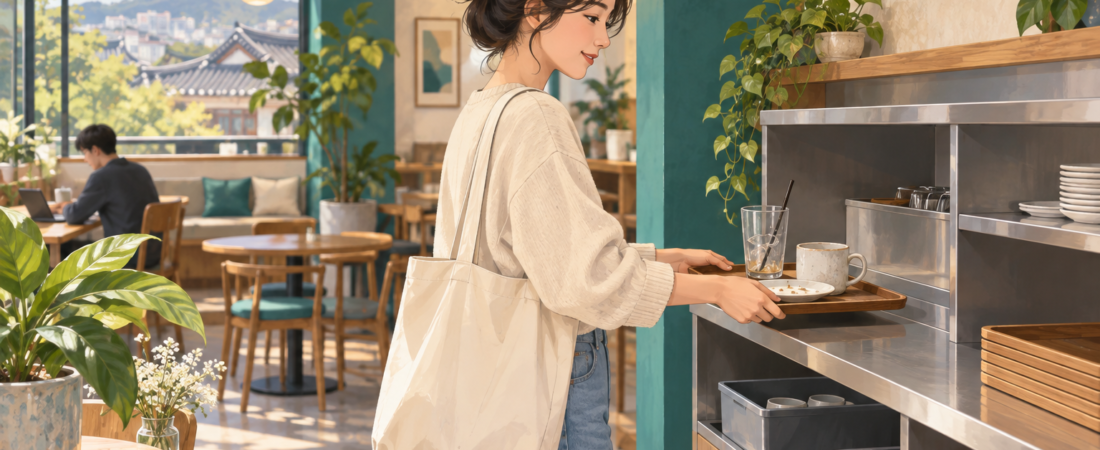
Look for a return shelf and separate bins. Follow its labels for cups, lids, leftover liquid, and general waste. If the setup is unclear, hand the tray to staff or ask where it belongs. Do not pour drinks into a decorative plant or a random container.
FAQ
Can I stay all day after one coffee? Only if the venue permits the length and type of use you need; check rather than assume.
Is there always a toilet? No guarantee. A cafe may share a building toilet or require a key or code. Ask a staff member.
Related guides
Find the correct cafe branch · Public toilet guide · Tipping guide
Sources and checks
Last checked: September 14, 2026. This guide combines the linked reference information with practical travel suggestions. Venue policies and services can change; follow current signs and staff guidance.