Ikseon-dong and Jongno 3-ga make an unusually easy Seoul evening: wander narrow hanok lanes, sit down for Korean barbecue, then decide whether a noisy outdoor table or a pojangmacha is your kind of night. The two experiences are next to each other, but they are not the same place. Ikseon-dong is the hanok alley area; the livelier outdoor drinking and food streets sit around its edges and the station.
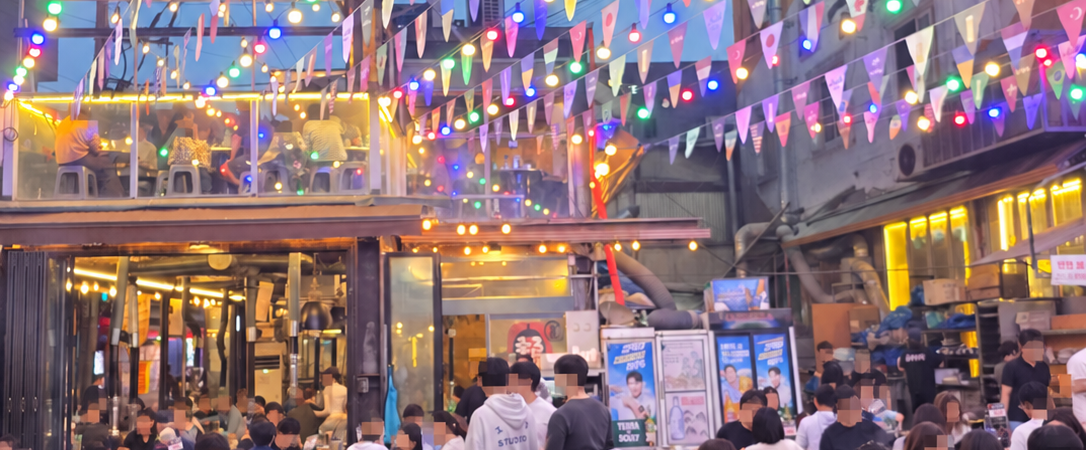
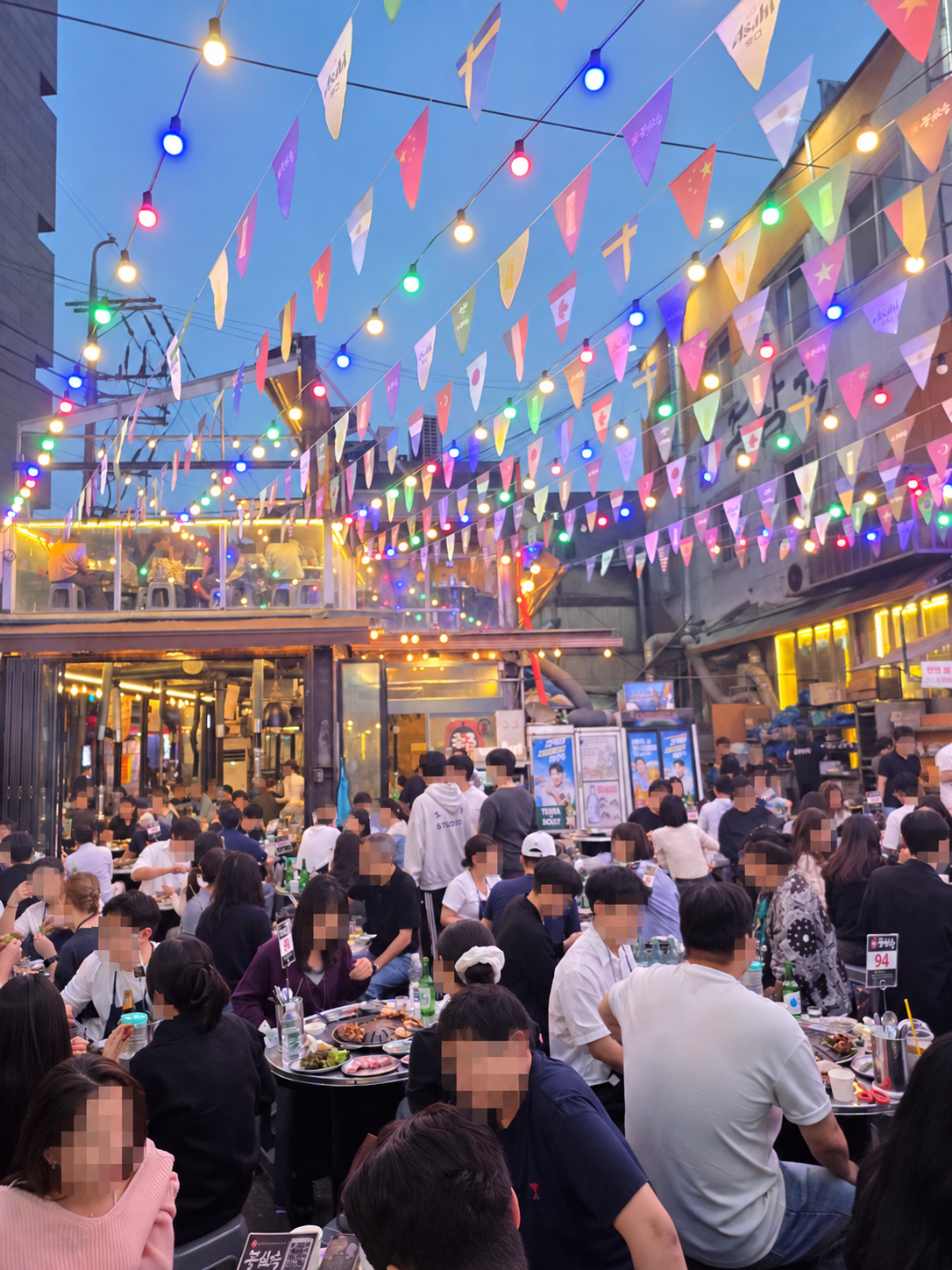
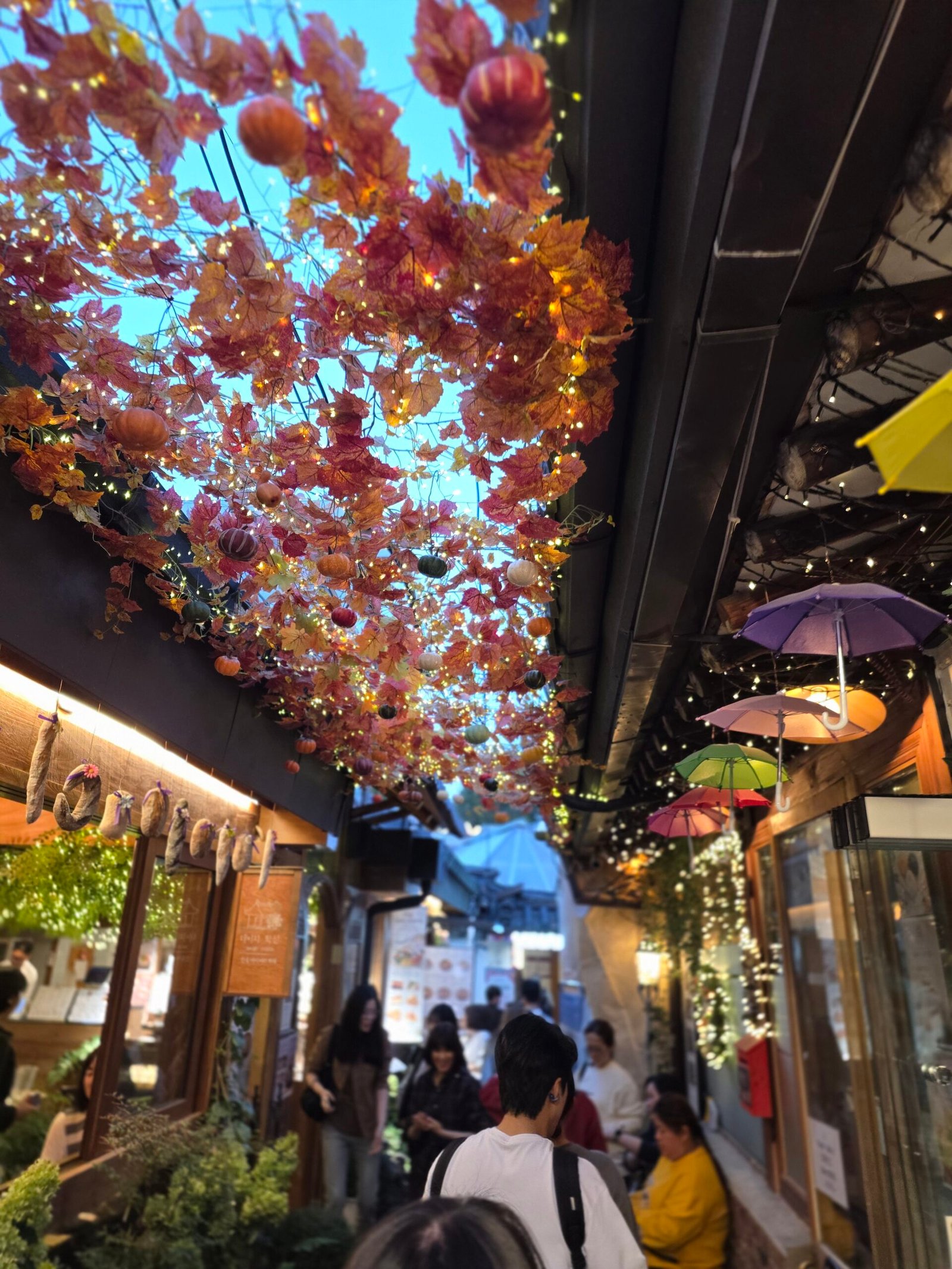
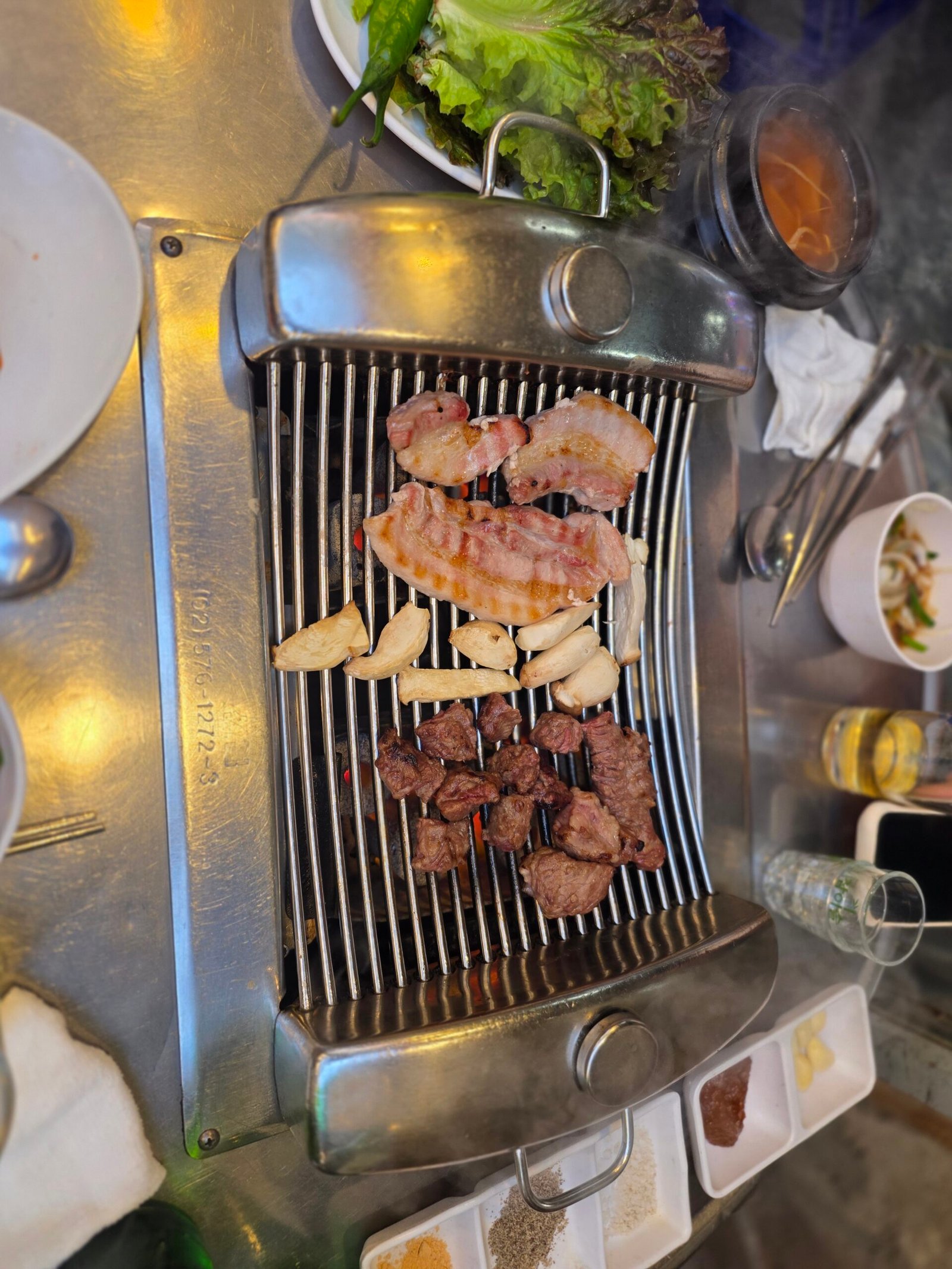
The Korea Pathbook photographs make this evening concrete: a decorated hanok lane, pork belly and beef sharing a grill with mushrooms, and closely packed outdoor tables around Jongno 3-ga. They show why it helps to make three separate choices—where to wander, where to eat, and whether to continue to a louder pocha afterward. The grill image does not identify or endorse one restaurant. Faces in the busy street image have been obscured; menus and outdoor seating can change.
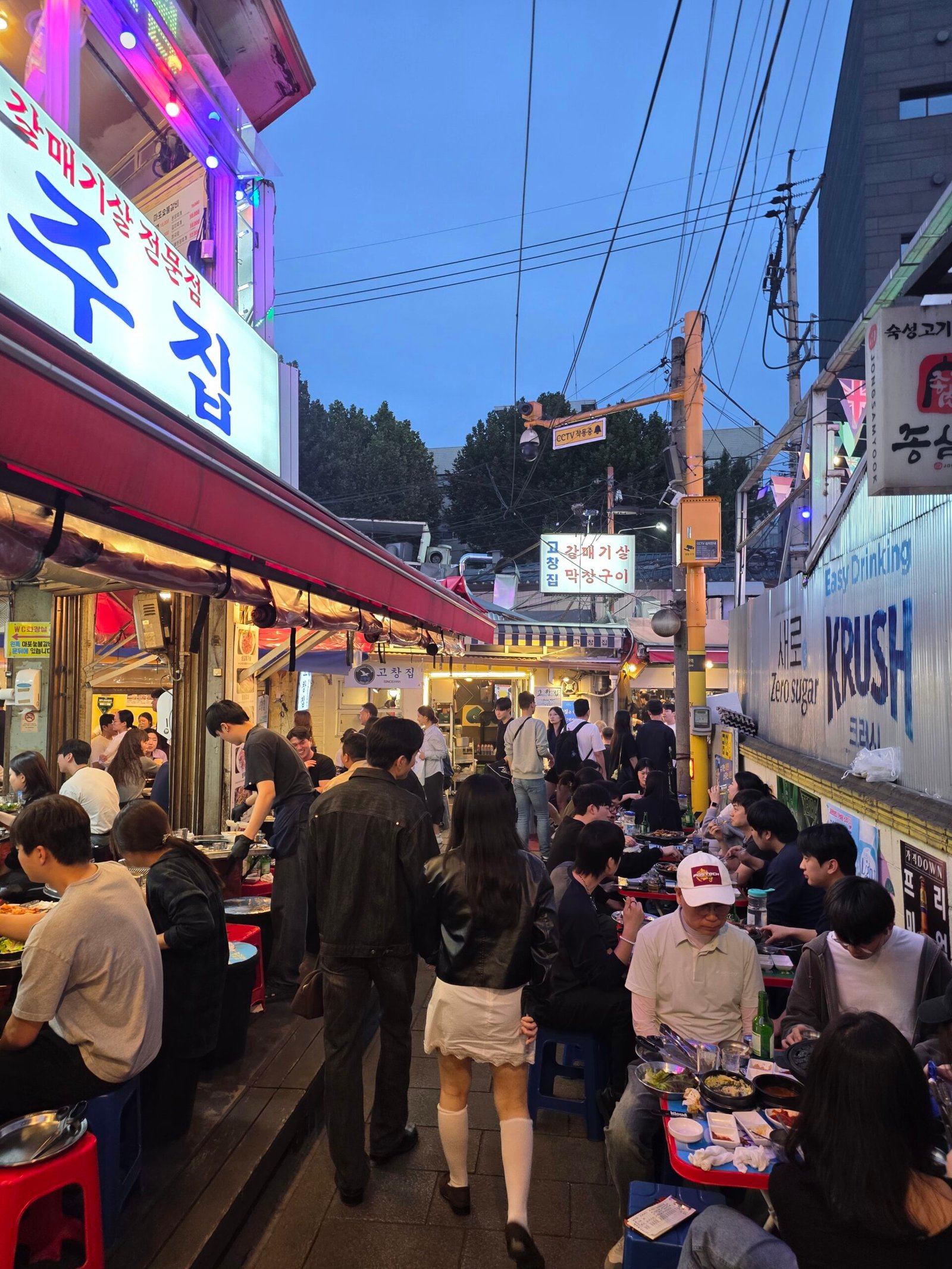
From my Jongno 3-ga evening: What stayed with me was the energy of the younger crowd and the Korean-style outdoor tables. The close-set seating brought Tokyo’s Omoide Yokocho to mind as a loose comparison, but the food, signs and social atmosphere felt distinctly Korean. For me, that lively 야장 (outdoor dining) scene offered a glimpse of Seoul’s night culture beyond the quieter hanok lanes.
Ikseon-dong vs. Jongno 3-ga: what is the difference?
Jongno 3-ga (종로3가) is the subway station and the surrounding central Seoul neighborhood. Ikseon-dong (익선동) is a smaller area of hanok lanes close to that station. A hanok is a traditional Korean house; today, many of these buildings contain cafés, restaurants and shops. You can enjoy the architecture and food without treating the lanes as an open-air museum. People also live and work nearby, so keep your voice down at residential doors.
The Korea Tourism Organization describes the street from Jongno 3-ga Station Exit 6 toward Ibis Ambassador Insadong as Ikseon-dong Hanok Street. Visit Seoul separately describes the pojangmacha area on the edges of the hanok lanes. Think of this as one compact evening area with several distinct moods, rather than one long street of identical restaurants.
At a glance: plan your evening
| Question | Practical answer |
|---|---|
| Where should I start? | Jongno 3-ga Station (Lines 1, 3 and 5). Exit 6 is a useful approach to Ikseon-dong Hanok Street; Exit 4 also leads toward the hanok restaurant lanes. |
| How long do I need? | About 2–3 hours for a relaxed lane walk, one meal and an optional second stop. Add time for queues. |
| Do I need a ticket? | No ticket to walk the public hanok streets. Food, drinks and nearby attractions cost extra. |
| When is it lively? | Late afternoon into evening is a good planning window. Individual cafés, restaurants and stalls set their own hours. |
| What do I search in a map? | 익선동 한옥거리 (Ikseon-dong Hanok Street) and 종로3가역 (Jongno 3-ga Station). For a particular restaurant, save its Korean name and address. |
| What is 야장 (yajang)? | Outdoor tables or a casual open-air dining setup; availability depends on the venue and conditions. |
Getting to Ikseon-dong without wandering the wrong way
Take Subway Line 1, 3 or 5 to Jongno 3-ga Station (종로3가역). For the hanok street described by the Korea Tourism Organization, start at Exit 6. Visit Seoul also recommends Exit 4 for quick access to Ikseon-dong’s shops and eateries. Different exits serve different corners of the same neighborhood; choose the one nearest your saved destination. The lanes are narrow and twist between buildings, so keep a live walking map open rather than assuming every alley is a through-route.
If you come by taxi, give the driver the specific restaurant or “익선동 한옥거리.” A vehicle may stop on a wider road and leave you to walk into the alleys. There is no need to drive between Ikseon-dong and the Jongno 3-ga food streets. Our Naver Map guide helps with Korean place-name searches, and the Seoul subway guide covers tickets and transfers.
What to see before dinner
1. Follow the hanok rooflines and small courtyards
The reward here is noticing details at walking speed: low tiled roofs, timber frames, pocket courtyards, signs fitted into old façades and shopfronts tucked around corners. Renovated hanok can look very different from each other. Some cafés lean playful and colorful; others keep a more restrained courtyard feel. The decorations in our photo capture one moment, not a permanent installation, so visit for the lanes themselves rather than expecting the same display year-round.
2. Choose one café or shop, not a checklist of viral stops
A drink in a hanok café lets you experience the space without rushing. Check the menu and queue before joining, and look for a quieter side lane if the central passages are crowded. The streets are free to explore, while shop hours vary. VISITKOREA’s area listing makes the same distinction: the neighborhood is open, but individual businesses set their own schedules.
3. Add a nearby stop only if it fits your time
For a daytime or early evening extension, the Insadong area offers craft and souvenir browsing, while Jongmyo Shrine is a major heritage site nearby. Check official opening hours and ticket or tour rules before going; Jongmyo is not a casual late-night add-on. If your main goal is food and atmosphere, the hanok lanes and the surrounding dining streets are plenty.
Korean barbecue: samgyeopsal, galbisal and what to order
The grill photo shows thick pork belly, beef pieces and mushrooms cooking at the table. It is a useful picture of how a meal often unfolds: meat is ordered by portions, side dishes arrive, and the table becomes the center of the conversation. Do not assume every restaurant offers the same cuts or that the meat in a photo identifies a particular business.
| Korean menu word | What it means | What to check |
|---|---|---|
| 삼겹살 · samgyeopsal | Pork belly, usually grilled at the table. | Is the listed price per serving or for a set? |
| 갈비살 · galbisal | Beef rib finger meat; usually sold as a beef cut. | Confirm that it says 소 (beef) if avoiding pork. |
| 돼지갈비 · dwaeji galbi | Pork ribs or pork rib-style cuts, often marinated. | This is pork, even though “galbi” appears in the name. |
| 쌈 · ssam | A wrap made with lettuce or other leaves, meat and condiments. | Ask whether extra greens are included or charged. |
| 반찬 · banchan | Small accompanying side dishes. | Ingredients vary; ask if you have an allergy. |
| 냉면 · naengmyeon | Cold noodles, a common finishing dish. | Broth and toppings vary by restaurant. |
If the difference between galbisal and dwaeji galbi matters to you, show the Korean words on your phone rather than relying on an English translation. The Korea Tourism Organization’s Korean food guide explains samgyeopsal, leaf wraps and the usual barbecue accompaniments.
A simple order for first-time visitors
For two people, pick a venue, read the menu board, and ask about the minimum order before sitting. You might start with pork belly or a beef cut, then add rice or noodles after the grill. Portion sizes, minimum orders, included banchan and prices differ by restaurant. If staff handle the grill, let them lead; if you cook it yourself, keep raw meat tools separate from ready-to-eat food and make sure pork is thoroughly cooked. It is fine to ask for help: “구워 주시나요?” means “Do you grill it for us?”
For an example of a current hanok barbecue listing in the area, Visit Seoul lists Gowundon Ikseon Branch near Exit 4, with pork belly among its dishes. Treat that as an option to check, not a promise of a table or a recommendation based on our photo. Review today’s menu, opening hours and wait before visiting.
Yajang and pojangmacha: the livelier side of Jongno 3-ga
Yajang (야장) is the casual experience of eating and drinking at outdoor tables. Pojangmacha (포장마차), often shortened to pocha, refers to a street food and drinks setup; some are tented, while others look more like compact bars. Around Jongno 3-ga, the mood can shift quickly from a narrow hanok lane to a louder stretch of tables, grills and conversations. The two outdoor scenes in these photographs show why many visitors come after sunset.
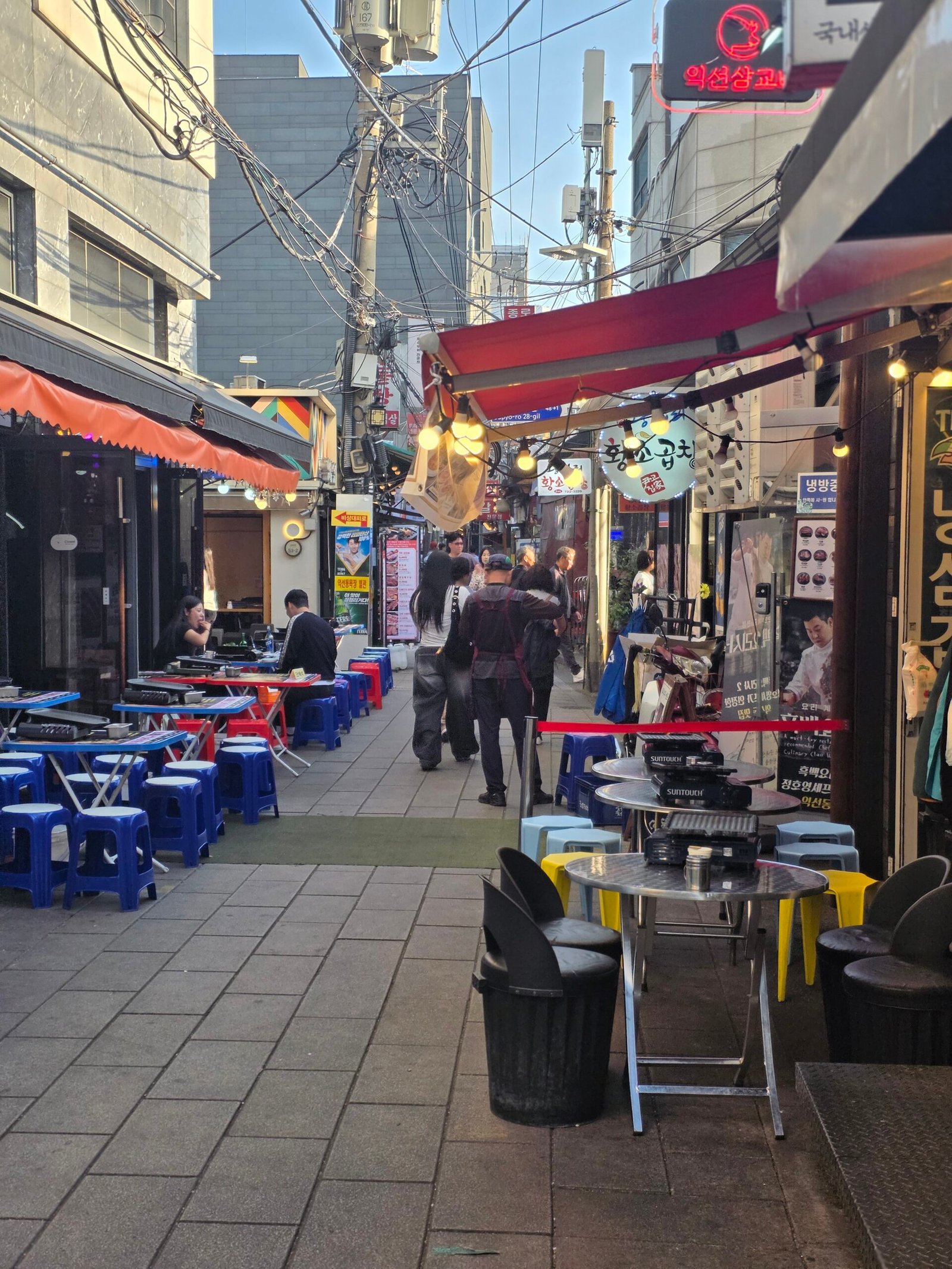
Do not expect every outdoor table to be a pocha or every pocha to serve barbecue. Some focus on grilled meat, others on drinking snacks or prepared dishes. Walk one block, compare menus and choose a place where you understand the price and ordering rules. Visit Seoul’s recent nighttime guide places a Jongno 3-ga pojangmacha street south of Ikseon-dong. Stalls, outdoor seats and their exact locations can change, so use that as an area to explore rather than a guarantee about a particular stall.
How to settle in without confusion
Before sitting, point to the menu and confirm the price of the food and drinks you want, whether there is a minimum order, and whether outdoor seating is available. In a busy alley, leaving a clear path for pedestrians matters. Keep bags close to your chair, watch the grill and hot dishes, and take a photo of the menu if you may need to check the bill later. If you do not drink alcohol, ask for water or another available drink; enjoying the atmosphere does not require soju.
A few phrases help: 두 명이에요 (du myeong-ieyo) means “There are two of us”; 메뉴판 주세요 (menyupan juseyo) asks for a menu; 이거 얼마예요? (igeo eolmayeyo?) asks the price; and 계산할게요 (gyesanhalgeyo) means you would like to pay. You can simply show the Korean text if pronunciation is difficult.
A relaxed first-visit route
Late afternoon: arrive at Jongno 3-ga Station and enter Ikseon-dong via Exit 6 or Exit 4. Wander the hanok lanes and pick one café or small shop if it interests you. Pause for photos without blocking residents’ entrances.
Early evening: eat dinner before the busiest part of the night. Choose samgyeopsal, galbisal or another dish based on the menu rather than an online photo. Check the total order and any waiting-list system.
After dinner: follow a map toward the busier streets around the station and south edge of Ikseon-dong. If the outdoor tables appeal to you, stop for one snack or drink; if it feels too crowded or smoky, keep walking. End near the station so your trip home stays simple. The whole outing can take 2–3 hours at an easy pace, longer if you queue or add another attraction.
Practical questions foreigners often ask
Is Ikseon-dong the same as Bukchon Hanok Village?
No. Both have hanok, but they are different Seoul neighborhoods. Ikseon-dong is the compact, restaurant-heavy area near Jongno 3-ga Station; do not use a Bukchon map pin for this outing.
Can I visit alone?
Yes, the lanes are enjoyable solo. Some barbecue venues have minimum orders designed for two or more people, so check before waiting. Cafés or other single-dish restaurants may be easier for one person.
Is it good for families?
The hanok lanes and an early meal can work well. Late-night pocha streets may be noisy, crowded and alcohol-focused. Keep children away from hot grills and watch the narrow passages.
Can I do it with a stroller or wheelchair?
Many alleys are narrow, and some doorways or older buildings have steps. Ask the venue about step-free entry and bathrooms before choosing it. A street route that looks short on a map may be awkward when crowded.
Are vegetarian or allergy-safe options easy?
Do not assume a vegetable side dish is vegetarian or free of seafood ingredients. Ask about broths, sauces and shared grills. If you have a serious allergy, use a translated allergy card and confirm directly with the restaurant before ordering.
Should I carry cash?
Many businesses in Seoul accept cards, but payment methods vary. Check the payment signs or ask before ordering at a small stall, and keep a backup payment option. Do not rely on a specific price or card rule from an old online review.
When do cafés and stalls close?
The hanok streets themselves can be walked at any time, but individual cafés, restaurants and stalls have their own hours. Weather and seasonal demand can affect outdoor tables. Check the business you choose on the day you go.
Can I photograph the outdoor dining scene?
Wide street scenes are one thing; recognizable close-ups of strangers are another. Ask before photographing people at their tables. Our crowded cover photo obscures faces for privacy.
How do I get home late?
Check the last train for your exact line and direction before the meal ends. If you use a taxi, save your hotel name and address in Korean. For urgent assistance, police are at 112 and fire or ambulance at 119; for general visitor help, see our 1330 tourism helpline guide.
What makes the evening memorable
The attraction is the change in pace within a few minutes: a low hanok roof, a small courtyard, then steam from a grill and bright strings of lights over outdoor tables. You can make the evening as quiet or as social as you like. Pick a single good meal and give yourself room to wander; the streets reward curiosity more than a packed list of “must-visit” venues.
Information checked October 18, 2026 against the linked Korea Tourism Organization and Visit Seoul pages. Photos supplied by Korea Pathbook; the exact restaurant and photo date are not claimed. Hours, menus, outdoor seating and access can change, so confirm details locally.