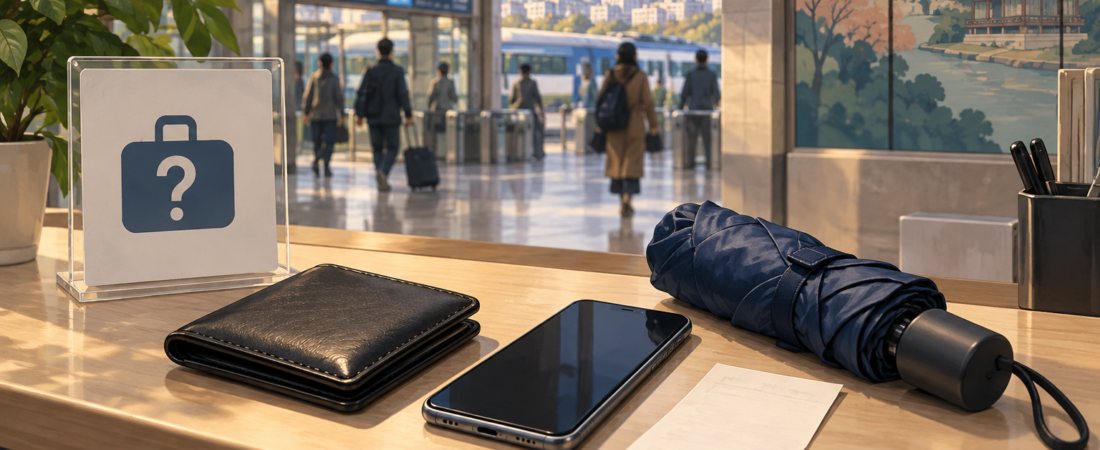
A lost bag or phone is easier to investigate when you can describe a short, precise timeline. Begin with the place or service where you last had it, then use the official police lost-property resources. Searching a database, reporting your loss and collecting a found item are different steps; completing one does not automatically complete the others.
Use the current official police entry point
Police Civil Service 24 (경찰민원24) now includes a lost-property section, with 분실물 신고 for reporting a loss and 습득물 검색 for searching found items. The police’s January 2026 announcement describes integrating and linking previously separate police services, including lost property.
Older guides often say “LOST112.” Its English guidance remains useful background, but start with the current police portal for live services and follow its notices if an old link no longer works. Do not assume an older screenshot matches today’s reporting form.
Step 1: write down the last confirmed location
Record the date, approximate time, venue or station, direction of travel, and the last moment you definitely had the item. For a train, add the train number and carriage or seat if available. For a taxi booked through an app, keep the trip record and use the app’s relevant support path. A receipt can help identify an operator even if you do not know the driver’s name.
Step 2: contact the venue or operator
Ask the shop, hotel, station or transport operator whether the item has been handed in and whether it has been transferred elsewhere. Visit Seoul’s lost-and-found page provides an official directory for transport-related inquiries. Use the operator matching your trip rather than assuming every railway line uses the same office.
Step 3: search found items and arrange a report if needed
On the current police portal, look for the found-item search. Use the available filters for a manageable date range and item type, then compare distinctive details. A similar color or brand is a lead, not proof of ownership. If a listing seems relevant, note its reference number and holding office before contacting staff.
If identity verification prevents you from reporting online, ask at a nearby police station or seek language assistance through 1330. The police’s English FAQ specifically directs foreigners without a foreign registration number to visit a police office to report a lost phone. Bring the details you recorded and ask what is required for your situation.
Useful Korean phrases
| Meaning | Korean |
|---|---|
| I lost my wallet. | 지갑을 잃어버렸어요. |
| I left my phone in the taxi. | 택시에 휴대전화를 두고 내렸어요. |
| Has a bag been handed in? | 맡겨진 가방이 있나요? |
| What do I need to collect it? | 찾으러 갈 때 무엇을 가져가야 하나요? |
Step 4: confirm collection before traveling
Ask the holding office to confirm its address, counter hours, item reference and proof-of-ownership requirements. If you leave Korea soon, explain your departure date and ask whether another collection arrangement is possible. Do not assume overseas shipping, a friend’s pickup or same-day release is available.
Keep recovery details private
Keep serial numbers, full card details and identity documents out of public social posts. Share necessary proof only through the relevant official process. If payment cards or a passport are missing, contact the issuer or your embassy as appropriate rather than waiting for a database match. Finding a listing does not itself protect an account or replace a travel document.
Sources and image notes
Official pages checked September 17, 2026. This is a practical navigation guide, not a guarantee of recovery or a completed police report. Illustrations show generic belongings with no real personal information.
Plan the next part of your trip
If you need help explaining the loss, read our 1330 travel helpline guide. For an item left in a booked taxi, the Korea taxi guide helps identify the app or operator to contact. Use NAVER Map to save the confirmed collection address.