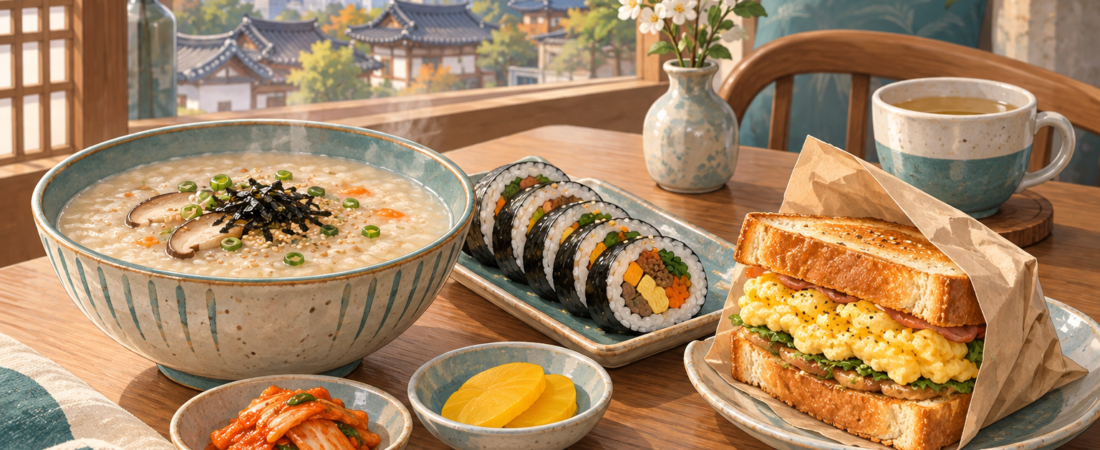
Breakfast in Korea is not one fixed menu. For a visitor, the most useful question is often not “What do all Koreans eat?” but “What can I get near my accommodation before today’s departure?” A porridge restaurant, a toast shop, a bakery, and a convenience store can solve different morning needs.
Plan the first morning before you go to bed. A cafe that looks perfect for breakfast may open too late for your train. Check the exact branch and day, then save a backup. The options below are food categories to consider, not claims about every neighborhood’s opening hours.
Choose breakfast by your morning plan
| Option | Best fit | Check first |
|---|---|---|
| 죽 / juk: rice porridge | A seated, warm meal | Broth, toppings, portion size, and opening time. |
| 김밥 / gimbap | A compact takeaway meal | Fillings and whether preparation will take time. |
| 토스트 / toast sandwich | A quick cooked option | Egg, meat, cheese, sauce, and sweetness. |
| Bakery or cafe | Bread and a drink with a short break | Dine-in policy and when food is available. |
| Convenience-store meal | An early start or fallback | Storage, heating, and where you can eat. |
| Hotel breakfast | A predictable start before departure | Serving window, price, and whether your booking includes it. |
Porridge: choose the actual ingredients
Juk is rice porridge with many variations. Some versions include seafood, meat, mushrooms, or nuts. VISITKOREA’s Seowon listing illustrates the range with abalone, shrimp, and chicken porridges and describes the restaurant as a breakfast option. That example does not mean every porridge shop opens early or uses the same recipe.
Ask about broth as well as the visible topping if ingredients matter to you. A vegetable name alone is not proof of a vegetarian preparation. Do not treat porridge as a medical remedy; choose it because you want the food and can verify that it suits your needs.
Local-style practical tip: If you want a calm first breakfast, choose somewhere close enough that you can return to your accommodation easily. Save the ambitious food hunt for a morning without luggage or a fixed departure.
Gimbap and toast: useful, but not identical everywhere
A freshly made gimbap roll can be convenient to carry, but fillings vary. Ask what is inside and keep perishable food appropriately stored. An egg toast sandwich can include cabbage, ham, cheese, sugar, or sauces depending on the shop. If you prefer a less sweet version, ask whether the sauce or sugar can be adjusted before cooking begins.
For a group, decide the main items before reaching the counter. Confirm takeaway packaging and collect all drinks before leaving. Avoid discovering that a hot drink is missing after you have started walking toward the station.
Prepare for an early train or tour
- Work backward from the actual meeting time, not just departure time.
- Include walking, ordering, eating, and luggage collection.
- Check whether your hotel can provide an early option.
- Keep a simple packaged backup that matches its storage instructions.
- Do not assume food is allowed wherever you wait or travel.
Local-style practical tip: If the morning is tight, choose breakfast near where you already are. Crossing the city for a famous shop can turn a small meal into a missed reservation.
How to find a real morning option
Search your map app for the exact dish name plus your area. Compare the listed opening time with recent business notices and check the branch address. If timing is important, contact the business or ask your accommodation to confirm. “Open now” is helpful but not a guarantee that every menu item is being served.
FAQ
Is Korean breakfast always rice and soup? No. Choices differ by person and schedule; use the option that fits your morning.
Can I order breakfast foods later? Some are served beyond breakfast, but menus and service times are venue-specific.
Related guides
Convenience-store guide · Find a nearby branch · KTX departure checklist
Sources and checks
- VISITKOREA: Seowon — an example of a porridge breakfast restaurant
- VISITKOREA: Tips for Vegetarians — checking broth and fillings
Last checked: September 14, 2026. This guide combines the linked reference information with practical travel suggestions. Venue policies and services can change; follow current signs and staff guidance.